

Table of Contents
- Why Bathroom Maintenance Callbacks Drain Your Budget
- Common Hotel Bathroom Plumbing Issues That Trigger Repeat Visits
- Preventive vs. Reactive Maintenance: Why Your Current Approach Costs More
- Building a Preventative Maintenance Checklist for Hotel Bathrooms
- simplifying Bathroom Repairs With OEM Kits and Standardized Protocols
- Digital Verification and Inspection Tracking Systems
- Staff Training and Maintenance Quality: The Often-Missed Link
- Frequently Asked Questions
Last Updated: September 1, 2026
Why Bathroom Maintenance Callbacks Drain Your Budget
Every maintenance callback costs money you didn't budget for. A technician returns to the same bathroom two, three, or sometimes four times to fix what should have been resolved on the first visit. Each trip burns labor hours, delays room turnover, and frustrates guests who encounter ongoing issues.
The math is brutal. If your hotel operates 200 rooms and experiences just two callbacks per month per bathroom maintenance issue, that's 400 repeat visits annually (the NIH). Each callback represents lost revenue from extended room out-of-service time, staff frustration, and the compounding cost of emergency calls outside normal business hours.
The root problem isn't usually incompetence. It's fragmentation. Maintenance teams order parts individually, work from inconsistent procedures, and lack verification systems that confirm a repair actually solved the problem before moving to the next room. Preventive maintenance protocols and standardized repair kits reduce callbacks by addressing the real causes, incomplete repairs, wrong parts, and lack of follow-up verification.
This guide walks through the specific strategies that eliminate bathroom maintenance callbacks in hotels, from identifying the most common plumbing failures to implementing digital tracking systems that catch problems before guests report them.
Common Hotel Bathroom Plumbing Issues That Trigger Repeat Visits
Certain plumbing failures repeat across nearly every hotel property. Understanding which issues generate the most callbacks helps you prioritize prevention.
Pressure problems top the list. High water pressure damages fixtures, causes leaks at connection points, and creates noise that guests report as disturbances. Low pressure frustrates guests mid-shower and triggers complaints that lead to maintenance visits. Without pressure control in place, technicians may tighten connections or replace aerators without addressing the underlying pressure issue, guaranteeing a callback when the real problem resurfaces.

Clogging and drainage failures are equally persistent. Hair, soap buildup, and debris accumulate in drain lines. A technician snakes the line, water drains temporarily, but the underlying buildup remains. Within weeks, the same drain clogs again. Reactive maintenance treats the symptom; preventive maintenance includes drain treatments and regular inspections that catch buildup before it becomes a guest complaint.
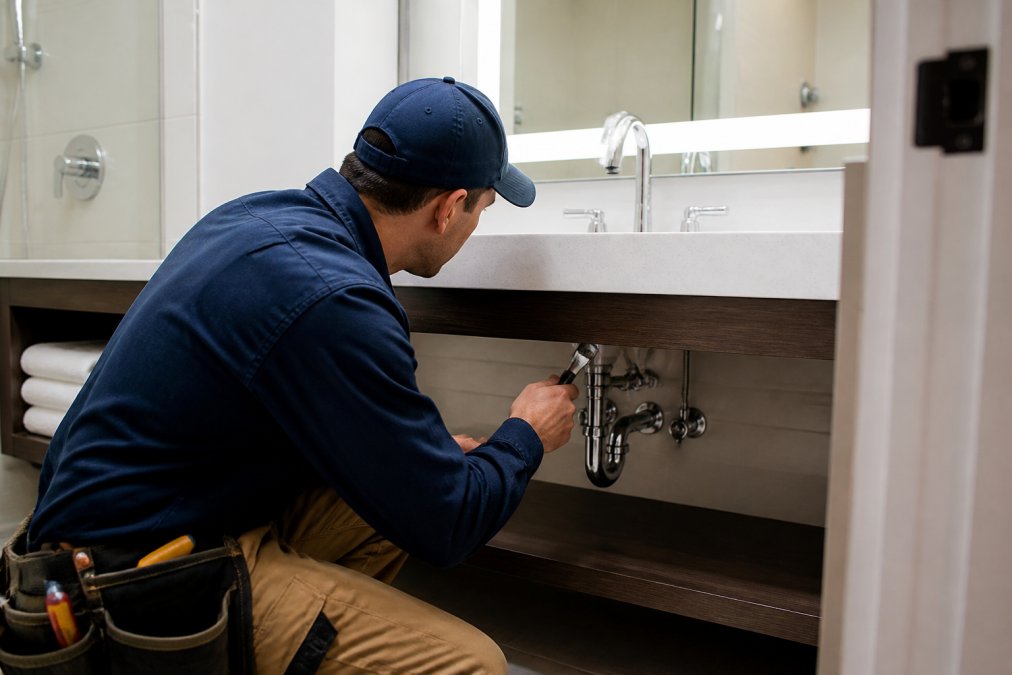
Fixture failures at connection points are another major source of callbacks. Cartridge valves wear out, washers deteriorate, and supply line connections develop micro-leaks that aren't obvious during initial inspection. A technician replaces one component but doesn't address related wear in the same fixture assembly. Months later, a different part in the same fixture fails, triggering another callback.
Water damage behind walls compounds the problem. Slow leaks go undetected until drywall damage becomes visible or mold appears. By then, the original leak has been present for weeks or months. Reactive responses to water damage don't address what caused the leak in the first place, meaning the same leak source continues after repairs.
Inconsistent fixture brands across your property create another hidden cost. One bathroom has Moen fixtures, another has Delta, a third has Kohler. Technicians carry different parts, follow different installation procedures, and lack standardized knowledge. This inconsistency increases both the likelihood of improper installation and the time required per repair.
Preventive vs. Reactive Maintenance: Why Your Current Approach Costs More
Reactive maintenance feels efficient in the moment. A guest reports an issue, maintenance responds, the problem is fixed. But this approach guarantees callbacks because it treats problems only after they become visible.
Preventive maintenance costs less over time, yet most hotel properties still operate primarily on reactive protocols. The shift requires upfront investment in inspection schedules, standardized parts, and staff training, costs that don't show up as dramatic line items but deliver measurable returns through reduced callbacks and faster room turns.
Here's the operational difference: reactive maintenance waits for failure. A faucet drips, a guest complains, a technician is dispatched. Preventive maintenance inspects fixtures on a schedule, replaces worn components before failure, and addresses pressure issues that cause cascading failures across multiple fixtures.
Consider pressure control. Installing pressure reducing valves at the main water line prevents high-pressure damage to every fixture downstream. This single preventive investment eliminates the callbacks triggered by pressure-related leaks, cartridge failures, and connection failures. Reactive teams replace individual failed cartridges repeatedly; preventive teams install the valve once and stop the failures.

The same logic applies to drain maintenance. Preventive drain treatments prevent clogs; reactive snaking treats clogs after guests experience slow drainage or backups. The preventive approach reduces emergency calls and guest complaints while lowering total maintenance labor.
Preventive maintenance also creates consistency. When every bathroom receives the same inspection schedule and uses the same standardized parts, technicians follow the same procedures, training is simpler, and quality improves. Reactive maintenance creates variability, different technicians, different parts sourced from different suppliers, different installation approaches.
Building a Preventative Maintenance Checklist for Hotel Bathrooms
A preventative maintenance checklist for hotel bathrooms must address the specific failure points that trigger callbacks. Generic checklists miss the details that separate consistent quality from repeat visits.
Start with pressure verification. Check water pressure at the main line and at individual fixtures monthly. Target pressure is 40-80 PSI; above 80 PSI requires a pressure reducing valve installation (the CDC). This single check prevents dozens of downstream failures.
Next, inspect all connection points for micro-leaks. Slow leaks at supply line connections, under-sink connections, and fixture inlets are invisible until water damage appears. Monthly inspections catch these before they cause damage.
Test all cartridge valves for smooth operation and proper temperature control. A cartridge that sticks, delivers inconsistent water temperature, or requires excessive force to operate is near failure. Replacing cartridges on a preventive schedule, typically every 18-24 months depending on water quality, eliminates the mid-stay failures that generate emergency callbacks (the American Dental Association).
Inspect drain lines for buildup. Visual inspection of drain flow and periodic drain treatments prevent the clogs that trigger guest complaints and emergency maintenance calls.
Check all seals, washers, and gaskets for deterioration. These wear items are inexpensive to replace preventively but expensive to ignore, a failed washer causes leaks that damage subfloors and walls.
Document every inspection and replacement in a digital system. This creates accountability, shows patterns across your property, and provides data to justify preventive investments to ownership.
| Maintenance Task | Frequency | Purpose | Callback Prevention |
|---|---|---|---|
| Pressure verification | Monthly | Prevent high-pressure fixture damage | Eliminates pressure-related failures |
| Connection point inspection | Monthly | Catch micro-leaks early | Prevents water damage callbacks |
| Cartridge valve testing | Quarterly | Identify wear before failure | Stops mid-stay fixture failures |
| Drain line inspection | Monthly | Prevent clogs and backups | Reduces emergency drain calls |
| Seal and washer replacement | Every 18-24 months | Address wear proactively | Prevents leak-related callbacks |
| Digital documentation | Every visit | Track patterns and accountability | Enables data-driven maintenance |
simplifying Bathroom Repairs With OEM Kits and Standardized Protocols
When a repair is needed, standardized OEM-grade kits eliminate the variables that cause incomplete repairs and callbacks.
Traditional repair approaches require technicians to source parts individually. A cartridge valve fails, the technician determines the brand and model, drives to a supply house or orders online, waits for delivery or wastes time on a store run, then returns to install. This process stretches a 30-minute repair into multiple hours when you account for travel time and supply delays.
Pre-kitted solutions consolidate all necessary parts for common bathroom repairs into a single box. An OEM-grade kit for a shower cartridge replacement includes the cartridge, trim ring, handle, and all necessary seals and washers. The technician opens the kit, follows the standardized procedure, and completes the repair in one visit.
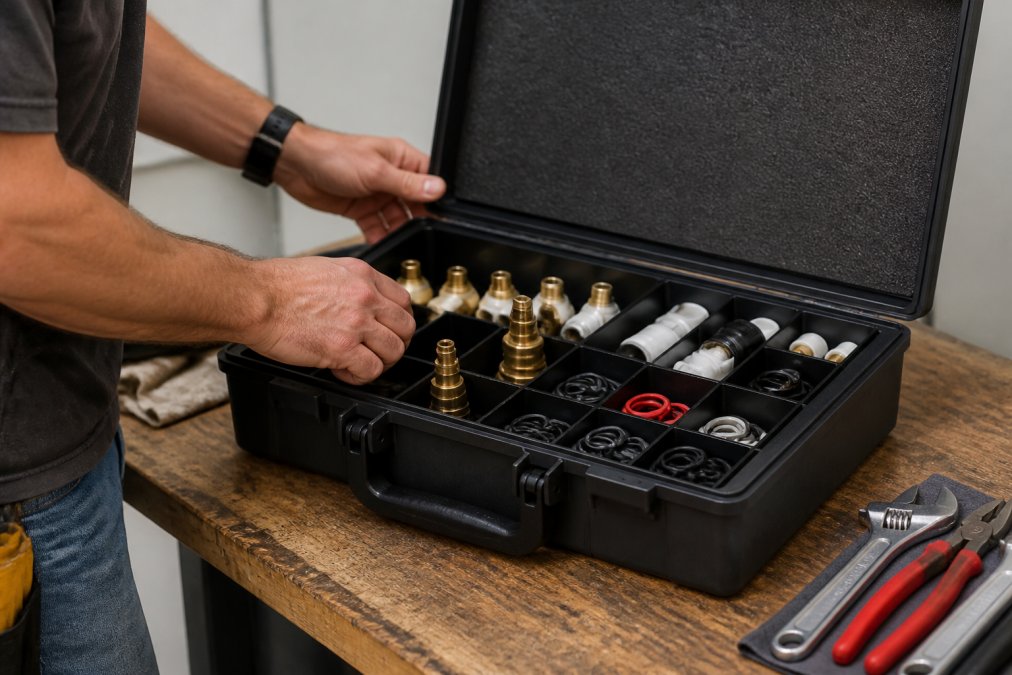
The efficiency gains compound across your property. If you manage 200 rooms and experience 10 bathroom repairs monthly, pre-kitted solutions save 15-20 labor hours per month through eliminated store runs and faster repair times. Across a year, that's 180-240 hours of labor, equivalent to one full-time technician's time.
More importantly, standardized kits ensure consistent quality. Every technician uses the same parts, follows the same procedure, and completes the same replacement steps. This consistency eliminates the variable-quality repairs that generate callbacks.
OEM-grade components matter for longevity. Aftermarket or generic parts may fit but fail prematurely. OEM cartridges, for example, are engineered to the exact specifications of your fixtures. They last longer, perform more reliably, and reduce the likelihood of premature failure that triggers callbacks.
Ready Bathroom Solutions provides pre-kitted solutions specifically designed for this workflow. Each kit includes OEM-grade parts from manufacturers like Moen, Delta, and BrassCraft, with bundle savings that help you optimize maintenance budgets while improving operational efficiency. For a hotel managing multiple properties, standardizing on pre-kitted solutions means every technician across every location follows the same procedures and uses the same quality parts, eliminating the inconsistency that causes callbacks.
Digital Verification and Inspection Tracking Systems
Without verification systems, you don't know whether a repair actually solved the problem until the guest reports it again.
Digital tracking systems create accountability and provide early warning before callbacks occur. After each repair, the technician documents what was done, what parts were used, and whether the repair passed a verification test. For a cartridge replacement, verification means testing water temperature control and flow rate. For a pressure issue, verification means confirming pressure readings post-repair.
This data reveals patterns. If a particular fixture model fails repeatedly, you identify it as a problem before it generates dozens of callbacks. If a specific technician's repairs have a higher callback rate, you identify training gaps. If a particular supply line connection point consistently develops leaks, you address the root cause rather than treating symptoms.
Digital systems also enable predictive maintenance. When you track when fixtures were last serviced, you can schedule preventive replacements before failure occurs. A cartridge installed 24 months ago is due for preventive replacement; scheduling that replacement prevents the mid-stay failure that would trigger an emergency callback.
Cloud-based systems allow property managers to monitor maintenance activity across multiple locations, compare callback rates between properties, and identify which teams or procedures deliver the best results. This visibility drives continuous improvement.
Integration with your property management system means maintenance data flows directly into room status tracking. When a repair is completed and verified, the room status updates automatically, eliminating delays from manual communication.
Staff Training and Maintenance Quality: The Often-Missed Link
Callbacks often trace back to staff training gaps, not equipment failure.
A technician unfamiliar with a particular fixture brand may install a cartridge incorrectly, failing to seat it fully or missing a critical seal. The repair appears successful initially, but within days the fixture fails again. The technician didn't understand the specific installation procedure required by that brand.
Standardized training programs eliminate these gaps. When every technician follows the same procedure for the same repair, quality becomes consistent. Training should cover not just installation steps but the verification process, how to test that a repair actually solved the problem before leaving the room.
Training also addresses the most common mistake: addressing symptoms rather than root causes. A slow-draining sink might be a clogged drain or a pressure problem. A technician trained only on reactive responses snakes the drain. A technician trained on preventive diagnostics checks pressure first, identifies the real problem, and addresses it properly.
Staff retention matters directly to callback rates. Experienced technicians understand fixture brands, anticipate problems, and complete repairs correctly. High turnover means constant retraining and lower quality. Standardized procedures and pre-kitted solutions reduce the skill level required for basic repairs, making your operation less dependent on individual expertise, but ongoing training remains essential for quality.
The most effective approach combines standardized kits, clear procedures, and regular training updates. When a technician has the right parts, a clear procedure to follow, and understands the verification process, callbacks drop significantly.
Bathroom maintenance callbacks aren't inevitable, they're the result of reactive approaches, inconsistent procedures, and fragmented parts sourcing. Hotels that shift to preventive maintenance, standardized OEM-grade kits, and digital verification systems see immediate reductions in callbacks and dramatic improvements in room turnover speed.
Ready Bathroom Solutions simplifies this transition with pre-kitted bathroom repair solutions that consolidate OEM-grade parts into single boxes, eliminating store runs and ensuring consistent quality across your properties. Our kits include components from trusted manufacturers like Moen, Delta, and BrassCraft, with bundle savings that help you optimize maintenance budgets while improving operational efficiency. Shop All Bathroom Kits and start reducing callbacks today.
Frequently Asked Questions
What are the most common causes of hotel bathroom maintenance callbacks?
The leading causes include low water pressure from debris in aerators or faulty pressure regulators, recurring clogs from improper drain maintenance, fixture leaks from worn washers or cartridges, and water damage from undetected slow leaks. Many callbacks happen because initial repairs use incorrect replacement parts or technicians skip preventive checks. Using OEM-grade parts and following a systematic inspection checklist prevents repeat visits.
How does a preventative maintenance checklist for hotel bathrooms reduce emergency calls?
A structured checklist catches problems before guests report them. Monthly inspections of water pressure, drain flow, faucet condition, and toilet operation identify worn components early. Addressing issues proactively, replacing cartridges, cleaning aerators, installing pressure control valves, prevents the emergency calls that disrupt operations and damage guest loyalty. Properties using standardized checklists can reduce after-hours maintenance emergencies.
Can pre-kitted bathroom repairs with OEM parts really streamline repairs across multiple properties?
Yes, when kits match your fixture brands and pipe sizes. OEM-grade parts from manufacturers like Moen and Delta ensure compatibility and durability, eliminating the guesswork that causes failed repairs. Pre-kitting means technicians spend zero time shopping and arrive on-site with everything needed. Standardized kits across a portfolio also simplify staff training and reduce inventory confusion, cutting repair time per visit.
How does reducing maintenance callbacks improve guest loyalty?
Guests notice broken bathrooms immediately and leave negative reviews when repairs take multiple visits. Reliable, first-time-right repairs signal professional management and boost satisfaction scores. Properties that eliminate callbacks see higher retention rates, fewer online complaints, and stronger word-of-mouth referrals. In hospitality, bathroom quality directly influences perceived value, fixing it right the first time is a competitive advantage.
This article was written using GrandRanker