

Table of Contents
- Why Bulk Ordering Bathroom Repair Parts Matters for Property Teams
- Essential Bathroom Repair Components in Bulk Orders
- Reducing Maintenance Callbacks Through Standardized Parts
- Optimizing Property Management Maintenance Costs
- Building a Maintenance Supply Chain Efficiency Strategy
- How to Place Your First Bulk Order
- Conclusion
- Frequently Asked Questions
Last Updated: August 31, 2026
Why Bulk Ordering Bathroom Repair Parts Matters for Property Teams
Property managers face a persistent operational challenge: bathroom repairs happen constantly, yet sourcing individual parts wastes hours and delays unit turnover. When a toilet flapper fails at 2 p.m., your maintenance team either makes an emergency store run or schedules the repair for tomorrow. Neither option moves units back into service quickly.
Bulk ordering bathroom repair parts solves this by consolidating everything your team needs into pre-assembled kits. Instead of hunting for compatible cartridges, wax rings, and mounting hardware across multiple suppliers, you stock standardized components that work across your portfolio. The result is faster repairs, fewer callbacks, and lower overall maintenance costs.
At Ready Bathroom Solutions, we've worked with property teams managing everything from student housing to hospitality properties. The pattern is consistent: teams that shift to bulk ordering see unit turnaround times drop. More importantly, they stop paying premium prices for emergency parts sourcing.
This guide covers how bulk ordering bathroom repair parts actually works in practice, what components matter most, and how to build a supply chain that reduces downtime without creating warehouse clutter.
Essential Bathroom Repair Components in Bulk Orders
Bathroom repairs break down into predictable categories. Understanding which plumbing replacement parts matter most helps you choose the right bulk order strategy.
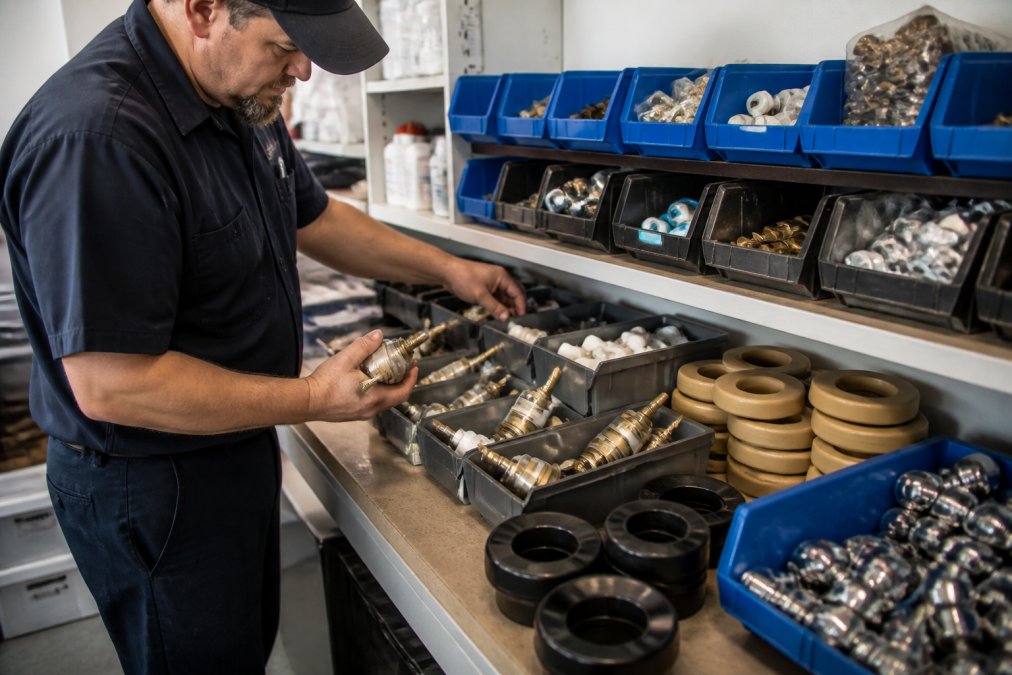
Toilet Repair Components
Toilet failures account for roughly 40% of bathroom maintenance callbacks (peer-reviewed research). Most of these stem from three components: the flapper, the fill valve, and the tank lever.
The flapper deteriorates faster than any other part. Water exposure and mineral buildup degrade the seal, causing constant running and water waste. When you bulk order bathroom repair parts, include multiple flappers in different sizes. Standard sizes cover 90% of units, but older properties sometimes have oversized tanks requiring larger flappers (phccweb.org).
The fill valve (ballcock) controls water level. When it fails, toilets either run continuously or don't refill properly. Including quality fill valves in your bulk kits prevents the most expensive callback scenario: a flooded bathroom.
Tank levers snap under normal use. A broken lever means the toilet won't flush until someone jiggles the handle or removes the tank lid. This ranks high on tenant complaints. Stock durable lever assemblies that fit standard tank openings.
Wax rings seal the toilet base to the flange. When a toilet rocks or leaks at the base, a new wax ring often solves it. For bulk orders, include extras, installation sometimes requires a second ring if the first compresses unevenly.
Ready Bathroom Solutions includes all four components in the Toilet Kit - Pro, which means your team has everything for a complete toilet repair without a second trip to the supply house.

Faucet and Cartridge Assemblies
Faucet cartridges control water flow and temperature. When they wear out, you get leaks, low flow, or temperature fluctuations. Cartridges are brand-specific: a Moen cartridge doesn't fit a Delta faucet.
For bulk ordering, standardize on one or two major brands across your portfolio. If your properties use primarily Moen fixtures, stock Moen cartridges. This eliminates compatibility guessing and ensures your team installs the right part first time.
Aerators screw onto the faucet spout and regulate flow rate. They clog with mineral deposits and reduce water pressure. Including replacement aerators in bulk orders is inexpensive but prevents tenant calls about low water pressure.
Mounting hardware, the nuts, bolts, and clips that hold faucet assemblies in place, often corrodes or breaks during removal. Pre-kitting includes these hardware items so your team doesn't improvise with mismatched fasteners.
The Sink Kit - Pro bundles cartridges, aerators, and mounting hardware specifically for sink faucet repairs, eliminating the need to source these separately.
Tub and Shower Repair Kits
Shower and tub failures typically involve valve cartridges, diverter assemblies, or trim rings. These components wear faster than supply line fittings because they handle daily temperature and pressure cycling.
Valve cartridges in shower systems are similar to sink cartridges but handle higher temperatures and pressure. They wear out and cause dripping, temperature control issues, or complete flow loss. Like sink cartridges, they're brand-specific.
Diverter assemblies redirect water between the tub spout and shower head. When they fail, water flows from both outlets simultaneously, wasting water and reducing shower pressure. Diverter replacement is straightforward once you have the right part.
Trim rings and escutcheon plates hide the rough-in plumbing behind wall tile. Worn or corroded trim rings look shabby and hint at underlying water damage. Including replacement trim in bulk orders keeps units looking maintained.
The Shower Kit - Pro includes cartridges, diverter assemblies, and trim components sized for standard rough-in dimensions, covering the majority of residential shower installations.
Reducing Maintenance Callbacks Through Standardized Parts
A maintenance callback occurs when a repair fails or the first technician installed the wrong part. Callbacks cost money twice: once for the original visit, again for the return visit. They also frustrate tenants and damage your reputation.
Standardized parts eliminate most callbacks. When every unit in your portfolio uses the same faucet brand and the same valve cartridge model, your team installs confidently. There's no guessing whether the part will fit. There's no incompatibility surprise mid-installation.
Bulk ordering forces standardization because you're buying the same components across multiple units. You can't standardize on five different cartridge types, that defeats the purpose. Instead, you choose one or two brands per fixture type and commit to them.
This approach also reduces training time. New maintenance staff learn one installation procedure per fixture type, not five variations. Experienced staff work faster because they're not troubleshooting compatibility issues.
Standardized parts can help reduce repeat callbacks compared to ad-hoc repair approaches. The combination of having the right part on hand and knowing it will fit creates a compounding efficiency gain.
Optimizing Property Management Maintenance Costs
Maintenance budgets typically run 5-8% of property revenue (irem.org). Within that budget, parts and labor split roughly 40-60. You can't eliminate labor, but you can optimize parts spending through bulk ordering.
Bulk ordering creates two cost advantages: volume discounts and elimination of emergency pricing. When you order 50 faucet cartridges at once, your per-unit cost drops compared to buying five cartridges at a time. Suppliers offer 15-20% bundle discounts for pre-kitted orders.
Emergency sourcing costs more. A midnight hardware store run for a single wax ring costs whatever that store charges, often 2-3x the wholesale price. Bulk pre-kitting eliminates emergency sourcing entirely because your team has inventory on hand.
Reduced callbacks also cut labor costs. If standardized parts cut callbacks, that's fewer technician hours spent on repeat visits. For a property with 200 units and an average of two callbacks per unit per year, that's fewer service hours annually.
The math is straightforward: bulk order bathroom repair parts, reduce callbacks, reduce emergency sourcing, reduce total maintenance spend. Most property managers see ROI within 6-12 months.
Building a Maintenance Supply Chain Efficiency Strategy
A supply chain strategy answers three questions: What parts do you stock? How much do you order? When do you reorder?
Start by auditing your existing maintenance data. Pull your repair tickets from the past 12 months and categorize by component type. How many times did you replace a toilet flapper? How many faucet cartridges? How many shower valve cartridges? This data tells you exactly what to bulk order.
Next, standardize your fixture brands. Walk your portfolio and document which brands dominate. If 70% of your units have Moen faucets and 20% have Delta, standardize on Moen. Over time, replace Delta fixtures with Moen during routine renovations. This convergence makes bulk ordering more efficient.
Then establish reorder triggers. If your 50-unit property uses 10 toilet flappers per month, reorder when inventory drops to 15 units (a 1.5-month buffer). This prevents stockouts without overstocking.
Most property teams find that quarterly bulk orders work well. You're not managing monthly invoices, but you're also not sitting on 12-month inventory. Quarterly ordering aligns with seasonal maintenance patterns: spring and fall typically see higher turnover activity.
Ready Bathroom Solutions offers standardized kits designed around these patterns. Rather than building your own bulk order from scratch, you can order pre-assembled kits that include everything for a specific repair category, with quantities sized for properties of different scales.
How to Place Your First Bulk Order
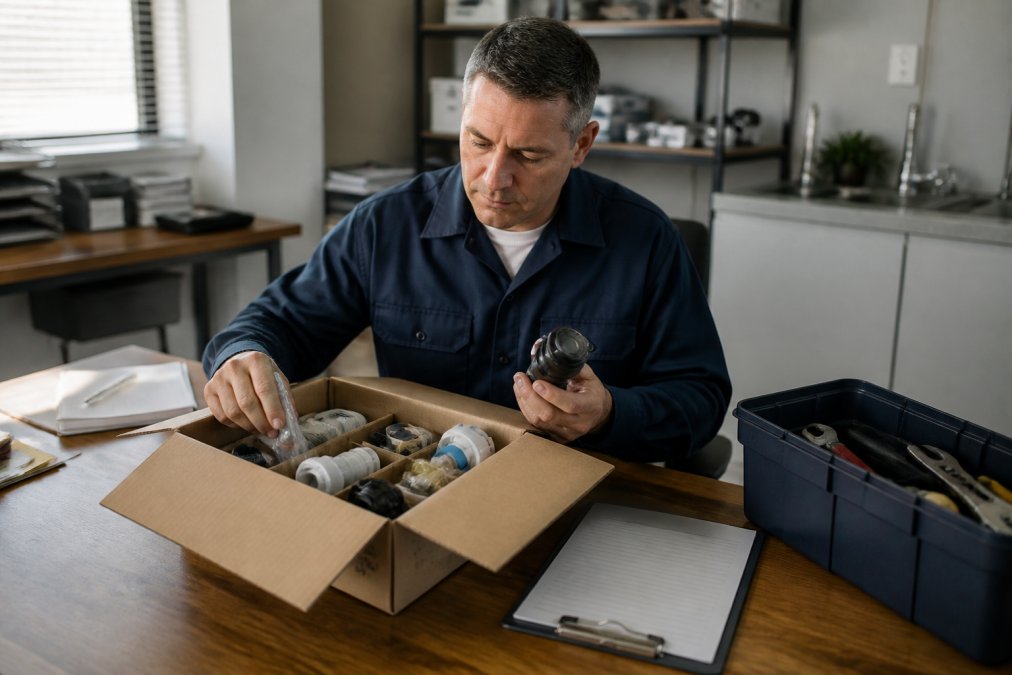
Placing your first bulk order for bathroom repair parts follows a straightforward process.
Step 1: Audit Your Current Repairs
Review the past 6-12 months of maintenance tickets. Identify your top 10 repair types. How often do you replace toilet flappers? Faucet cartridges? Wax rings? This data becomes your ordering guide.
Step 2: Standardize Your Fixture Brands
Document which brands dominate your portfolio. Walk a sample of units and note faucet brands, toilet models, and valve types. Choose one primary brand for each fixture category. This decision matters more than the specific brand, consistency is what drives efficiency.
Step 3: Calculate Order Quantities
Use your audit data to estimate monthly usage. If you manage 100 units and replace 5 toilet flappers per month, a quarterly order would be 15 flappers. Add a 20% buffer for seasonal variation.
Step 4: Select a Bulk Ordering Partner
Compare options based on three factors: part quality, kit customization, and pricing. OEM-grade parts (original manufacturer components) outperform aftermarket alternatives and reduce callbacks. Pre-kitted options like Ready Bathroom Solutions's Complete Kit - Pro eliminate the need to assemble your own order.

Step 5: Place Your Order and Set Up Reorder Schedule
Order your first bulk shipment. Document the order date and establish a reorder calendar. Most teams reorder quarterly, but adjust based on your usage data.
Step 6: Train Your Team
Brief your maintenance staff on the new parts and where they're stored. If you're switching brands or introducing new part types, show installation procedures. This prevents confusion during repairs.
Step 7: Track Inventory and Adjust
Monitor how quickly you consume inventory. If you're depleting supplies faster than expected, increase order quantities. If inventory sits unused, reduce quantities. After two quarterly cycles, you'll have accurate data for ongoing orders.
Conclusion
Bulk ordering bathroom repair parts transforms maintenance from a reactive, expensive process into a predictable, efficient operation. By standardizing components, pre-staging inventory, and eliminating emergency sourcing, property teams reduce downtime and cut costs simultaneously.
The fastest way to implement this approach is with pre-kitted solutions designed specifically for property professionals. Ready Bathroom Solutions's kits, including the Complete Kit - Pro, Toilet Kit - Pro, Sink Kit - Pro, and Shower Kit - Pro, come pre-assembled with OEM-grade components sized for portfolio-wide consistency. Your team gets everything needed for complete repairs without hunting for parts, and the 15-20% bundle savings cover the efficiency gains you'll realize within months. Start your bulk ordering strategy today and get your units back in service faster.

Frequently Asked Questions
Q: What are the benefits of buying plumbing repair parts in bulk?
A: Bulk ordering bathroom repair parts reduces labor costs by eliminating frequent store runs, ensures consistent OEM-grade quality across all your properties, and speeds unit turnover by having all necessary components ready before maintenance begins. Pre-kitted solutions like the Complete Kit - Pro consolidate toilet flappers, wax rings, faucet cartridges, and drain assemblies into a single order, reducing repeat callbacks and administrative overhead. Most property teams see faster room restoration and lower per-unit maintenance expenses.
Q: How do pre-kitted bathroom repair parts reduce maintenance callbacks?
A: Pre-assembled repair kits eliminate the risk of missing components that cause incomplete repairs and customer complaints. When your team has all necessary mounting hardware, gaskets, seals, and valve stems in one box, repairs are completed correctly the first time. Standardized OEM parts from brands like Moen and Delta ensure compatibility and durability, reducing the likelihood that a fixture fails shortly after installation. This consistency across your portfolio directly lowers callback rates and associated labor costs.
Q: Is it more cost-effective to buy individual parts or pre-assembled repair kits?
A: Pre-assembled kits typically offer 15-20% bundle savings compared to purchasing individual plumbing replacement parts separately. Beyond the price discount, kits eliminate hidden costs: no more emergency after-hours orders, reduced administrative time coordinating multiple vendors, and fewer wasted labor hours on store visits. For property managers overseeing multiple units or properties, the convenience and speed of having all components ready justifies the switch, even when per-item pricing appears comparable.
Q: How can standardized repair parts improve unit turnover speed?
A: Standardized bathroom repair components reduce decision-making and setup time for your maintenance team. When every property uses the same faucet cartridges, toilet tank levers, and drain assemblies, technicians work faster and make fewer mistakes. Pre-kitted solutions eliminate the need to verify compatibility or hunt for missing hardware. For multifamily complexes and hospitality properties managing dozens of units, this standardization directly cuts the time between tenant checkout and unit readiness, improving occupancy rates and revenue.
This article was written using GrandRanker