

Last Updated: November 4, 2026
Quick Summary
Best practices for maintenance procurement include standardizing repeat purchases, separating routine orders from urgent repairs, and evaluating suppliers against documented requirements. Track orders, parts used, callbacks, and supplier performance so you can make evidence-based decisions about stocking, sourcing, and contracts.
- Group repeat needs by repair type, approve parts and alternates, and review the list when fixtures change.
- For emergency buys, record the approver, reason for the exception, and parts used.
- Set supplier pass/fail requirements before inviting bids, then score qualified suppliers consistently.
- Link work orders, purchase orders, receipts, and invoices using shared identifiers.
Table of Contents
- Best Practices for Property Maintenance Procurement: Set the Process
- Property Maintenance Procurement Checklist for Routine and Emergency Buys
- Maintenance Supplier Evaluation Criteria for Risk, Compliance, and Performance
- Property Maintenance RFQ Template: Define Scope and Compare Bids
- Maintenance Vendor Comparison: Cost, Fit, and Portfolio Consistency
- Track Supplier Performance and Connect Procurement to CMMS or ERP
- Standardize Bathroom Repairs with Ready Bathroom Solutions Kits
- Frequently Asked Questions
Best Practices for Property Maintenance Procurement: Set the Process
According to the [Federal Acquisition Regulation on competition and procurement planning | acquisition.gov], clear requirements and fair bid processes help buyers make sound purchasing decisions. The best practices for property maintenance procurement start with one principle: standardize repeat buys, but leave room for urgent repairs. Bathroom parts can be a practical place to set that standard. Maintenance procurement is the process of planning, buying, and tracking the goods and services needed to keep a property in working order.
A common mistake is treating every order as a one-off. That hides spend and makes it harder to keep parts consistent across sites.
Use this simple cycle:
- Group repeat needs by repair type.
- Set approved parts and alternates.
- Track orders, use, and callbacks.
- Review the list when fixtures change.
The best practices for property maintenance procurement should fit the work your teams actually do. A short, clear procurement policy beats a long document no one follows.
Property Maintenance Procurement Checklist for Routine and Emergency Buys
A property maintenance procurement checklist should separate planned work from urgent repairs, then set a clear path for each. Routine orders can follow an approved list and normal review. Emergency buys need a named approver, a reason for the exception, and a record after the repair. This split protects procurement transparency without slowing a time-sensitive fix.
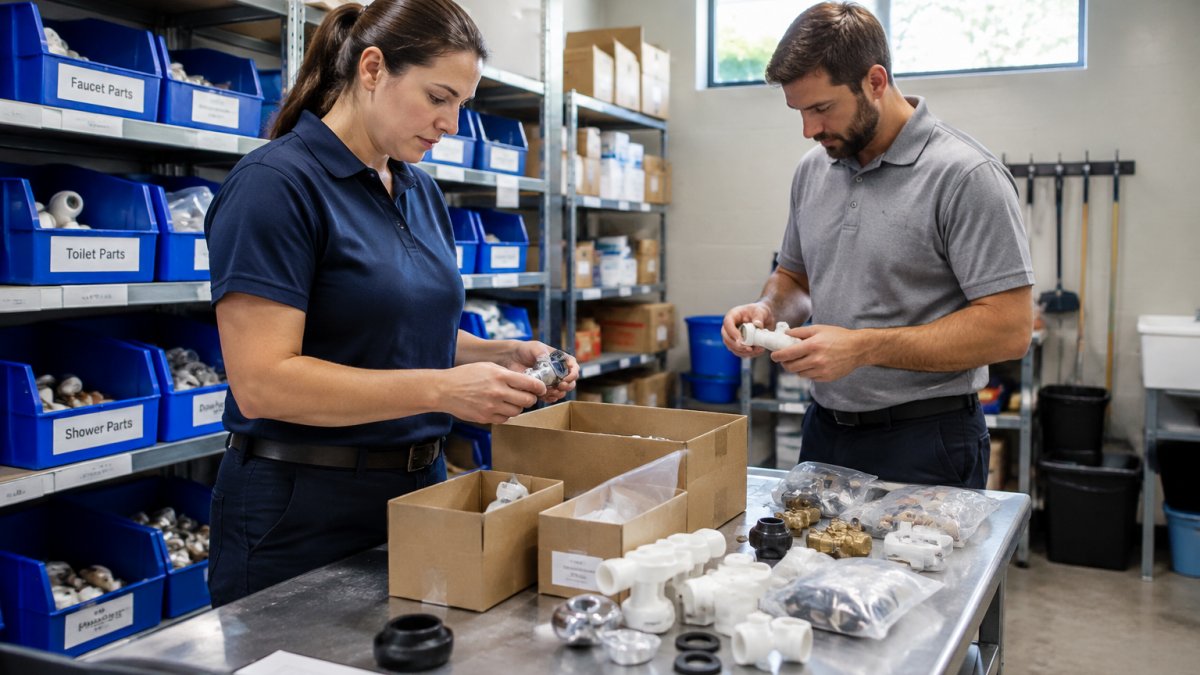
Use this checklist:
- Mark the repair as routine or urgent.
- Check stock before placing an order.
- Match parts to the fixture and connection.
- Record the approver and reason for exceptions.
- Log parts used and any follow-up visit.
- Review repeat emergency buys for a stocking fix.
For routine work, align inventory management with common repairs. For urgent work, document the choice afterward. That gives teams a usable record without forcing every repair through the same path.
Maintenance Supplier Evaluation Criteria for Risk, Compliance, and Performance
Evaluate maintenance suppliers through the same documented process, whether the purchase is for recurring parts or contracted repair work. Separate minimum requirements from scored preferences: a vendor that fails a critical product, insurance, or documentation requirement should not make up for it with a low price.
1. Set pass/fail requirements before inviting bids. Define the specifications the supplier must meet, such as compatible part numbers, approved substitutions, delivery locations, required service coverage, and the records needed for onboarding.
2. Check operational and financial risk. Confirm that the supplier can fulfill the expected order pattern, communicate delays, and support the properties or service area in scope. Ask how it handles backorders, discontinued items, returns, warranty claims, and urgent requests.
3. Compare qualified suppliers using a consistent scorecard. Score only after pass/fail requirements are met. A practical scorecard can assess specification match, total quoted cost, lead-time reliability, documentation, service response, and issue resolution.
4. Put expectations into the purchase order or contract. State the approved item or scope, substitution-approval process, delivery or response expectations, warranty terms, required records, and escalation contact.
5. Recheck risk during the relationship. Track late or incomplete orders, incorrect or substituted parts, repeat defects, unresolved claims, and service callbacks. Review patterns with the supplier, agree on corrective actions, and set a follow-up date.
Watch out: A low bid is not comparable if it excludes delivery, uses an unapproved substitute, or assumes a different service scope; resolve those differences before selecting a supplier.
Public-sector procurement requirements do not automatically apply to private property operators. Still, the Federal Acquisition Regulation’s emphasis on acquisition planning and competition can inform a disciplined process; use the rules that actually govern your organization and contract.
A simple vendor record should include the approved scope or items, qualification documents and review dates, bid evaluation, contract or purchase-order terms, performance issues, corrective actions, and current approval status.
Property Maintenance RFQ Template: Define Scope and Compare Bids
A useful property maintenance RFQ template gives every bidder the same scope, part details, delivery needs, and response format. Clear bid solicitation makes bid evaluation easier and reduces confusion about what the quote covers. Keep the request short enough that suppliers can answer it fully.
RFQ template
Fill Valve / Flush Valve - Fluidmaster Pro Series™ Adjustable Fill Valve →
- Property or site: [name]
- Repair type and quantity: [details]
- Required part or approved alternate: [specification]
- Delivery location and requested date: [details]
- Required documents: [list]
- Quote format: [unit cost, lead time, exceptions]
- Contact and response deadline: [details]
Ask vendors to flag substitutions rather than silently changing the item. Then compare like with like, including delivery terms and any stated limits. For broader work, a request for proposal can cover service plans and scope of work, while an RFQ suits defined goods.
Maintenance Vendor Comparison: Cost, Fit, and Portfolio Consistency
A maintenance vendor comparison should weigh total fit, not just the quoted unit cost. Check whether the part suits the fixture, whether teams can use it across sites, and whether repeat orders stay consistent. Cost-benefit analysis should include labor spent finding missing parts and handling repeat visits, without assuming savings that have not been measured.
| Procurement choice | Best use | Main check |
|---|---|---|
| Standard approved parts | Repeat repairs | Fixture match |
| Site-specific parts | Different layouts | Correct specifications |
| Emergency purchase | Urgent repair | Approval record |
| Pre-kitted repair set | Common bathroom fixes | Kit contents |
Ready Bathroom Solutions provides pre-kitted bathroom repair sets with OEM-grade parts from brands like Moen, Delta, and BrassCraft. The all-in-one box is designed to eliminate store runs and support consistent installations across a portfolio. A kit is not a fit for every building, so first map fixture types and common repair needs. For preventive work, see our shower maintenance practices.
Track Supplier Performance and Connect Procurement to CMMS or ERP
A purchase is not fully evaluated when the order is placed. The maintenance-specific gap many procurement guides leave open is the post-award audit: checking whether the supplier’s parts and service actually supported completed work orders, then using that evidence to change stocking, sourcing, or contract decisions.
Start with a small set of measures that can be traced to records:
- Order accuracy: ordered item and quantity compared with what was received.
- Lead-time performance: requested and confirmed dates compared with receipt date; keep backorders visible rather than counting only completed deliveries.
- Specification and substitution compliance: whether the delivered part matched the approved item or had documented approval for an alternate.
- Work-order impact: whether the part was available when needed and whether the repair required a follow-up visit for a related parts or quality issue.
- Emergency purchasing: the reason for the exception, approver, supplier, and whether the event points to a recurring stock or planning problem.
- Invoice and contract alignment: billed quantities, prices, and service charges compared with the purchase order or contract terms.
Do not attribute every repeat visit to a supplier. A callback may result from diagnosis, installation, access, or another cause. Record the reason when known, and use only evidence that supports the conclusion.
Connect the records with shared identifiers. A useful CMMS-to-procurement workflow links the work-order number, property or site, item or service code, purchase-order number, supplier, receipt, and invoice. When systems support integration, map those fields deliberately and agree which system owns each record. For example, the CMMS may hold the maintenance request, asset, and parts-used history, while the ERP or purchasing system holds supplier, purchase-order, receipt, and invoice data.
Use a practical transaction flow:
- A technician records the asset, repair need, and required part on the work order.
- The planner checks available inventory and the approved item or alternate before requesting a purchase.
- Procurement creates a purchase order tied to the work order or replenishment request and records the supplier’s commitment.
- Receiving records the quantity, condition, and any substitution against the purchase order.
- The technician records the part used and whether the repair was completed or needs follow-up.
- Accounts payable or procurement checks the invoice against the purchase order and receipt, then flags discrepancies for resolution.
If direct integration is unavailable, use a controlled export or shared report with consistent identifiers and a named owner for reconciliation. A spreadsheet can support a small operation, but define who updates it, how often it is reconciled, and where the authoritative record lives. Do not assume that buying software alone will resolve inconsistent descriptions or missing work-order data.
Run a monthly exception review and a periodic supplier review. The monthly review can focus on unmatched receipts, invoice differences, substitutions, overdue orders, emergency purchases, and repeat work orders. Assign each exception to an owner, record the cause and action, and check whether the issue recurs.
Watch out: A dashboard can make bad source data look authoritative; test a sample of linked orders against the original work orders, receipts, and invoices before relying on summary metrics.
Keep the audit proportionate and useful. The goal is not to generate a report for its own sake, but to make a traceable decision: retain the supplier and current process, correct a data or stocking problem, revise the scope, or change the approved source.
Standardize Bathroom Repairs with Ready Bathroom Solutions Kits
Standardized kits work best when the same repair recurs and the right parts are known. Ready Bathroom Solutions consolidates necessary parts into a single box to eliminate time-consuming store runs and provide standardized components for portfolio-wide consistency. That can support faster unit turns, but it will not solve contractor scheduling delays or replace a site-by-site fixture check.
Our catalog includes toilet fill valves, seals, angle stops, supply lines, PTFE tape, and closet bolts. For example, the Fluidmaster Pro Series adjustable fill valve is listed for $10.82 and adjusts from 9 to 14 inches. Check each item’s specifications against the fixture before setting a portfolio standard.
The best practices for property maintenance procurement are useful only when teams can follow them during a busy turn. Review the Complete Kit - Pro bathroom repair kit to see a ready-kitted option for property portfolios.
Frequently Asked Questions
What should a maintenance procurement policy include?
A useful policy sets approval limits, defines who can request and authorize purchases, and explains how to document bids, exceptions, and supplier decisions. It should also cover vendor onboarding, required insurance or compliance records, emergency purchasing, and contract review. For recurring repairs, specify approved parts and models where appropriate, then track spend and supplier performance so teams can update standards based on actual work orders.
What should be included in a maintenance request for quotation?
A maintenance RFQ should describe the work or parts needed, quantities, required specifications, delivery location and timing, and any service-level expectations. Ask vendors to identify substitutions, itemized costs, warranty terms, and delivery constraints. For bathroom repairs across multiple properties, include fixture or model details and connection requirements so bids are comparable. Record evaluation criteria and the reason for selection to support procurement transparency and later audits.
How should property managers compare maintenance vendors?
Compare vendors against the same scope and weighted criteria rather than choosing on unit price alone. Review specification fit, delivery reliability, documentation, contract compliance, and the time staff spend sourcing and reconciling parts. Track callbacks and order accuracy after award. For recurring bathroom work, standardized, pre-kitted components can eliminate time-consuming store runs; verify kit contents against the fixtures and connections at each property before adopting them portfolio-wide.
How can property managers reduce maintenance purchasing costs?
Start with spend visibility: group purchases by repair type, property, and supplier, then identify repeat items and avoidable rush orders. Standardize parts only where fixtures and connection specifications match, and compare total purchasing effort as well as item prices. Ready Bathroom Solutions lists individual products such as the Fluidmaster Pro Series Adjustable Fill Valve for $10.82 and the PROFLO toilet supply line for $3.91. Check current kit contents and pricing before placing a portfolio order.
Routine repairs become harder when each site orders parts differently. Ready Bathroom Solutions offers pre-kitted sets, OEM-grade components, and an all-in-one box design for bathroom maintenance. Get started with Ready Bathroom Solutions to support more consistent repairs across your properties.
