

Table of Contents
- What Bulk Bathroom Maintenance Really Costs Per Square Foot
- Bulk Purchasing vs. Retail Pricing: Unit Cost Breakdown
- Preventative Maintenance vs Reactive Maintenance Costs
- The Maintenance Labor Cost Breakdown You're Missing
- Facility Maintenance Inventory Management Best Practices
- How to Cut Bulk Bathroom Maintenance Costs Without Sacrificing Quality
- Building a Total Cost of Ownership Model for Restrooms
- Conclusion: Where to Start Your Cost Reduction Plan
- Frequently Asked Questions
Last Updated: September 6, 2026
Facility teams often treat bathroom repairs as a series of small, unpredictable expenses. A more accurate view is that the cost analysis of bulk bathroom maintenance reveals a predictable annual figure driven by labor hours, material quality, and inventory management. For property managers overseeing multifamily, hospitality, or student housing, this number typically lands between $0.15 and $0.45 per square foot annually, depending on traffic and fixture age (rsmeans.com).
What Bulk Bathroom Maintenance Really Costs Per Square Foot
A realistic starting point for bulk bathroom maintenance budgeting is $0.15 to $0.45 per square foot per year for commercial restrooms. This range covers routine parts replacement, seal maintenance, and labor, assuming you buy in bulk and track failures properly.
Typical Annual Budget Ranges for Commercial Restrooms
For a 200-unit apartment complex with roughly 10,000 square feet of bathroom space, that translates to an annual budget between $1,500 and $4,500. Hotels with higher turnover and stricter sanitation standards will sit at the top of that range. Student housing often exceeds it during move-in and move-out peaks. These figures exclude major renovations, focusing only on ongoing operational expenditure like fill valves, flush valves, wax rings, and the labor to install them.
Why Your Facility's Number Differs from Industry Averages
Your actual figure depends on three variables: fixture age, water quality, and turnover frequency. Older fixtures fail more often, hard water accelerates seal degradation, and high turnover means more opportunities for damage. A property with newer fixtures and low turnover might spend well under $0.15 per square foot, while an older property with aggressive tenants could double the high end.
Bulk Purchasing vs. Retail Pricing: Unit Cost Breakdown
Buying repair parts in bulk versus retail changes your unit cost dramatically, often by 40% or more on identical components. The difference is not just the sticker price; it is the elimination of emergency purchases at full retail markup. When a toilet fails on a Friday evening, the nearest hardware store charges a premium and your technician loses an hour driving to get it.
Individual wholesale pricing on a Fluidmaster Pro Series fill valve might run $10 to $12, while bulk procurement through a distributor or pre-kitted bundle brings that down closer to $8 or $9 per unit. The savings compound when you apply the same logic to wax rings, supply lines, and flappers across an entire portfolio.

Preventative Maintenance vs Reactive Maintenance Costs
Reactive maintenance is the default mode for many facility teams, but it is also the most expensive. Emergency repairs often cost more than the same work performed on a scheduled basis.
The Cost Multiplier of Emergency Repairs
A reactive repair typically follows a predictable chain: a tenant reports a failure, a technician is dispatched to diagnose, and a second trip is required once the correct part is sourced (energy.gov). Each trip carries a fully loaded labor cost of $50 to $75 per hour, plus vehicle expenses. In a multifamily setting, a single emergency toilet rebuild can easily consume 2.5 hours of technician time across two visits, totaling $125 to $185 in labor alone. The same repair performed during a scheduled preventative maintenance window takes 45 minutes and costs $37 to $56 in labor.
Beyond labor, emergency repairs often trigger overtime rates. A call that comes in at 4:00 PM on a Friday may require a technician to work past standard hours, adding a 1.5x or 2x multiplier to the hourly rate.
Frequency Data: Why Preventative Wins Over a 12-Month Cycle
The financial case for preventative maintenance becomes clearer when you model failure frequency. A standard fill valve in a commercial restroom has a service life of roughly 3 to 5 years under normal use, but in a high-traffic facility that lifespan can drop to 18 months. A preventative program that replaces fill valves at the 18-month mark costs one labor hour per fixture per cycle. A reactive program that waits for failure often results in the same replacement, but with an added diagnosis trip, an emergency parts markup, and a higher probability of water damage from a slow leak.
Consider a 100-unit building with 100 toilets. If 20% fail reactively each year, the labor cost alone is $2,500 to $3,700 (20 failures x $125 to $185). A preventative program addressing all 100 toilets on a 3-year rotation costs $1,850 to $2,800 annually (33 replacements per year x $56). The preventative approach also reduces the risk of water damage claims, which average $3,000 to $10,000 per incident.
The Hidden Cost of Downtime
Reactive maintenance also carries an opportunity cost that rarely appears in a maintenance budget. In hospitality, a room with a non-functional toilet cannot be sold. At an average daily rate of $150, a single day of downtime is a direct revenue loss. Preventative maintenance schedules work around occupancy cycles, ensuring repairs happen during low-demand periods rather than peak revenue windows.
Modeling Your Own Reactive-to-Preventative Ratio
To build a business case for your facility, track the following for 90 days: the number of emergency calls, the average time per call, the number of second trips, and the overtime hours logged. Many facility managers find that a significant portion of their reactive calls could have been prevented with a scheduled inspection. Applying your fully loaded labor rate to those preventable calls gives you the annual savings available from a preventative program.
The Maintenance Labor Cost Breakdown You're Missing
Labor represents 60% to 70% of your total facility maintenance cost, yet most budgets track only the hourly rate, not the overhead wrapped around each repair. Fully loaded labor includes benefits, vehicle costs, training, and the administrative time to process work orders.
Store Runs and Turnover Costs: How They Drain Budgets
The most overlooked line item in maintenance labor is the store run. A technician who leaves a property to buy a $12 part burns 45 minutes of drive time, plus the hourly cost of the vehicle. At a fully loaded labor rate of $50 per hour, that single store run adds roughly $37 in overhead to a repair that should have cost $20 in total.
Facility Maintenance Inventory Management Best Practices
Effective inventory management is the difference between a maintenance team that reacts to failures and one that prevents them. The core principle is simple: keep the right parts on hand in the right quantities, and reorder before you run out.
Bulk Storage and Inventory Shrinkage: What to Track
Bulk storage introduces a new problem: inventory shrinkage. Parts disappear from shelves, get used for non-budgeted repairs, or sit unused so long they degrade. Rubber seals and gaskets have a shelf life, and a wax ring stored for two years may crack on installation. Track inventory by unit, not by box, and conduct quarterly counts to identify shrinkage. This is where many bulk procurement strategies fail; they optimize purchase price but ignore the cost of dead stock.
How to Cut Bulk Bathroom Maintenance Costs Without Sacrificing Quality
Standardizing your repair process is the fastest way to reduce costs, and it starts with the parts you put in front of your technicians. When every toilet repair uses the same fill valve, flush valve, and wax ring, your team stops making decisions and starts completing work.
Standardized Kits: The Fastest Way to Reduce Callbacks
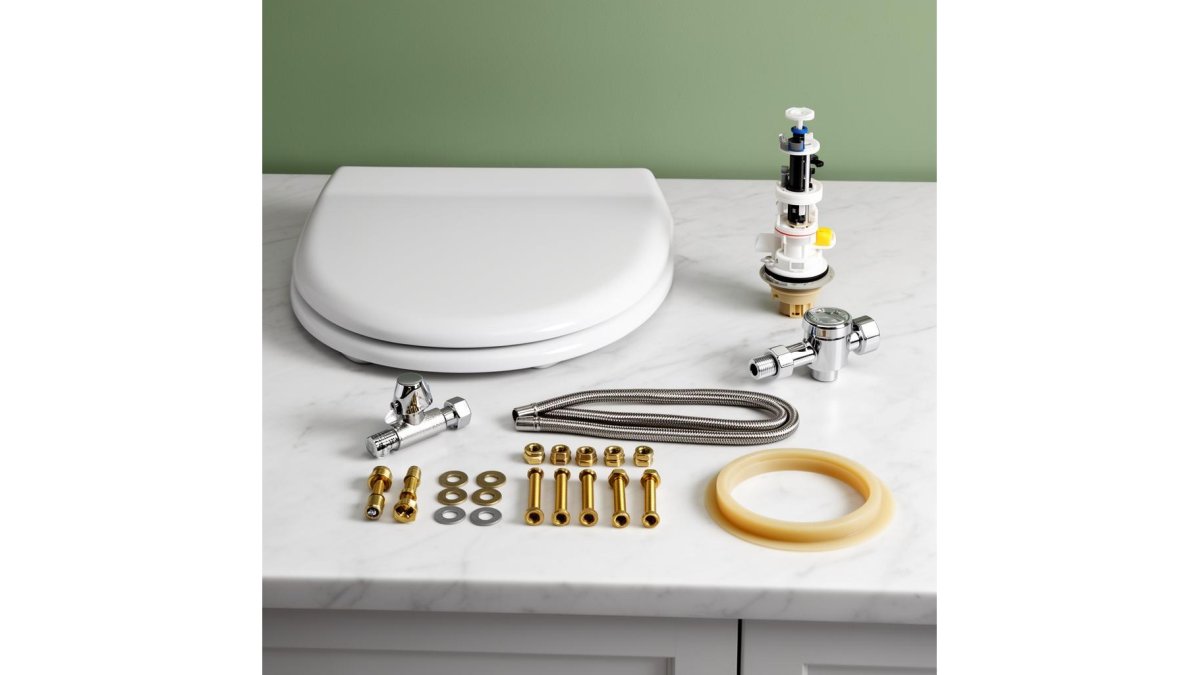
A callback occurs when a repair fails and a technician must return, doubling the labor cost and frustrating residents or guests. Callbacks are often caused by mismatched parts or rushed installations. Pre-kitted solutions from Ready Bathroom Solutions can help eliminate these variables by bundling OEM-grade components from trusted brands like Fluidmaster into a single box. The Toilet Kit - Pro includes everything needed for a complete toilet rebuild, ensuring the technician has the right part on the first visit.

| Cost Factor | Reactive Approach | Preventative with Kits |
|---|---|---|
| Fill valve unit cost | $10.82 retail | Included in bulk kit |
| Store run labor overhead | $37 per trip | Eliminated |
| Callback rate | 15-20% of repairs | Near zero |
| Technician time per repair | 60-90 minutes | 30-45 minutes |
Building a Total Cost of Ownership Model for Restrooms
Total cost of ownership (TCO) is the only accurate way to compare bathroom components, yet most facility budgets are built on purchase price alone. A TCO model accounts for the part cost, the labor to install it, the frequency of replacement, the downtime cost while the unit is out of service, and the risk of collateral damage from a failed seal.
The TCO Formula
The core formula is straightforward: TCO = (Part Cost + Installation Labor + Downtime Cost) ÷ Service Life. The challenge is gathering accurate inputs for each variable. Installation labor is the fully loaded cost, including benefits, vehicle expenses, and administrative overhead, which typically runs $50 to $75 per hour. Downtime cost varies by facility type: for a hotel, it is lost room revenue; for an office building, tenant disruption; for multifamily, the risk of a rent concession or negative online review.
Comparative ROI: High-Traffic vs. Low-Traffic Materials
A lifecycle cost analysis reveals that material selection should be driven by traffic patterns, not upfront price. In a low-traffic office restroom, a standard wax ring may last 5 to 7 years, making it cost-effective. In a high-traffic transit hub or busy restaurant, the same wax ring may fail in 18 to 24 months. A rubber or neoprene seal, which costs 2 to 3 times more upfront, can last 5 years or more in the same environment. When you factor in the labor to replace a failed seal, the rubber option is often 30% to 40% cheaper on a per-year basis.
A similar comparison applies to fill valves. A standard plastic fill valve at $8 to $10 may last 2 to 3 years in a low-traffic setting. A commercial-grade metal or pre-rinse fill valve at $15 to $20 can last 5 to 7 years. The higher upfront cost is offset by a 50% reduction in replacement frequency, which directly reduces labor hours. For a portfolio of 500 toilets, moving to a longer-life fill valve can save 100 to 150 labor hours annually.
The Hidden Cost of Water Damage
The most significant variable in a TCO model is the cost of a failed seal. A $4 wax ring that fails can leak water into the subfloor, causing wood rot, mold, and structural damage. The average water damage claim in a commercial property ranges from $3,000 to $10,000, and in severe cases, it can exceed $25,000 (iii.org). This is why the TCO model must include a risk premium for components with a known higher failure rate.
Material Durability and Service Life Benchmarks
While specific service life varies by usage, most facility managers observe the following patterns: standard wax rings last 3 to 5 years in moderate traffic, rubber seals last 5 to 10 years, plastic fill valves last 2 to 4 years, and metal or reinforced fill valves last 5 to 8 years. Flush valves typically need replacement every 5 to 7 years in commercial settings. These benchmarks provide a starting point for your own TCO calculations, but your maintenance logs should be the final authority.
Building the Model in a Spreadsheet
A practical TCO model can be built in a spreadsheet with columns for each component type, the unit cost, the average service life, the fully loaded labor rate, and the estimated downtime cost. For each component, calculate the annualized cost by dividing the sum of part and labor by the service life. Then add a risk factor for components with a history of failure. This model allows you to compare a $10 fill valve with a 3-year life against a $18 fill valve with a 6-year life, side by side, and see which one actually costs less per year.
The Sustainability Angle: Longer Life Equals Lower Waste
A TCO model also supports sustainability goals. Components that last longer reduce the volume of waste sent to landfills and decrease the frequency of manufacturing and shipping.
Conclusion: Where to Start Your Cost Reduction Plan
Start by auditing your maintenance logs for the last 12 months. Count every repair, the parts used, the time spent, and every store run. That data will show you exactly where your budget leaks, and it will likely point to labor inefficiency and callbacks as the biggest offenders. The fix is not harder work; it is smarter procurement and standardized processes. Ready Bathroom Solutions supports this shift with pre-kitted, OEM-grade repair bundles that can help eliminate store runs, reduce callbacks, and get units back in service faster.
Frequently Asked Questions
What is the typical annual cost for commercial bathroom maintenance?
Annual costs for commercial bathroom maintenance typically range from $1.50 to $3.00 per square foot, depending on facility type and usage. High-traffic restrooms in hotels or student housing fall at the upper end of that range. This figure includes labor, replacement parts, and consumables. For a precise estimate, track your own maintenance labor hours and supply spending over a full year, then divide by total square footage. Facilities that rely on reactive repairs often exceed this range because emergency callouts and expedited shipping carry premium pricing.
How do you calculate the total cost of ownership for bathroom maintenance?
Total cost of ownership (TCO) combines material costs, maintenance labor hours, and inventory carrying costs. Start with your annual spend on replacement parts like fill valves and wax rings. Add the labor cost for each repair, factoring in both travel time and time spent sourcing parts. Include the cost of holding inventory, including shrinkage and dead stock. Finally, add the cost of callbacks when a repair fails. Standardized kits reduce TCO because they eliminate store runs and cut callback rates through consistent OEM-grade parts.
How does preventative maintenance compare to reactive maintenance costs?
Preventative maintenance costs less over time because it replaces worn parts before they fail. A reactive approach carries higher labor overhead, emergency callout fees, and the risk of water damage from undetected leaks. For example, replacing a $10 fill valve during a scheduled inspection costs one labor hour. Waiting for a failure can involve overtime pay, an urgent parts run, and damage to flooring or drywall. Facilities using preventative schedules can reduce annual maintenance spending compared to purely reactive operations.
How can standardized maintenance kits reduce facility maintenance costs?
Standardized kits cut costs by eliminating the most expensive part of a repair: the labor hours spent sourcing parts. When a technician has every OEM-grade component in one box, a toilet repair takes one trip instead of two. This reduces turnover costs and gets units back in service faster. Standardized parts also reduce callbacks because the same components are used across every unit, so technicians become familiar with the installation. For property managers, this consistency simplifies inventory management and prevents stockpiling of incompatible parts.
The path to lower costs is not buying cheaper parts; it is buying the right parts once and installing them correctly the first time. Standardized kits deliver that outcome consistently across every property in your portfolio. Get started with Ready Bathroom Solutions and turn your maintenance cost analysis into a concrete reduction plan.