

Table of Contents
- Why Maintenance Parts Standardization Breaks the Turnover Cycle
- Student Housing Maintenance Checklist: What to Inspect Every Turn
- How to Build a Standardized Parts Inventory System
- Preventive Maintenance for Student Housing: A Proactive Framework
- Reducing Maintenance Turn Time with Standardized Parts Kits
- Lifecycle Cost Analysis and Sustainability in Parts Procurement
- Training Your Team on Standardized Parts and SOPs
- Conclusion
Last Updated: August 22, 2026
Why Maintenance Parts Standardization Breaks the Turnover Cycle
Standardizing maintenance parts for student housing is the single highest-use operational change a facilities team can make during turnover season. Student housing turns happen in a compressed window, often two to four weeks between lease cycles. Every hour a technician spends driving to a supply house, waiting on a parts order, or discovering mid-repair that they grabbed the wrong faucet cartridge is an hour the unit stays off-market. Multiply that across 200 units and you have a scheduling disaster.
Standardizing maintenance parts solves this by eliminating variability at the component level. When every unit uses the same faucet body, toilet fill valve, and showerhead assembly, your team stops diagnosing and starts executing. Standardized components allow you to pre-stage parts kits before turn season begins, reduce technician errors, accelerate training, and give purchasing managers real volume pricing because you're ordering the same SKUs repeatedly.
This guide provides the tactical framework for building standardization: what to inspect, how to build your inventory system, and how to calculate whether standardization actually saves money over time.
Student Housing Maintenance Checklist: What to Inspect Every Turn
A thorough move-out inspection is the foundation of every efficient turn. Without a structured punch list, technicians miss items, callbacks accumulate, and repair triage becomes reactive instead of planned.
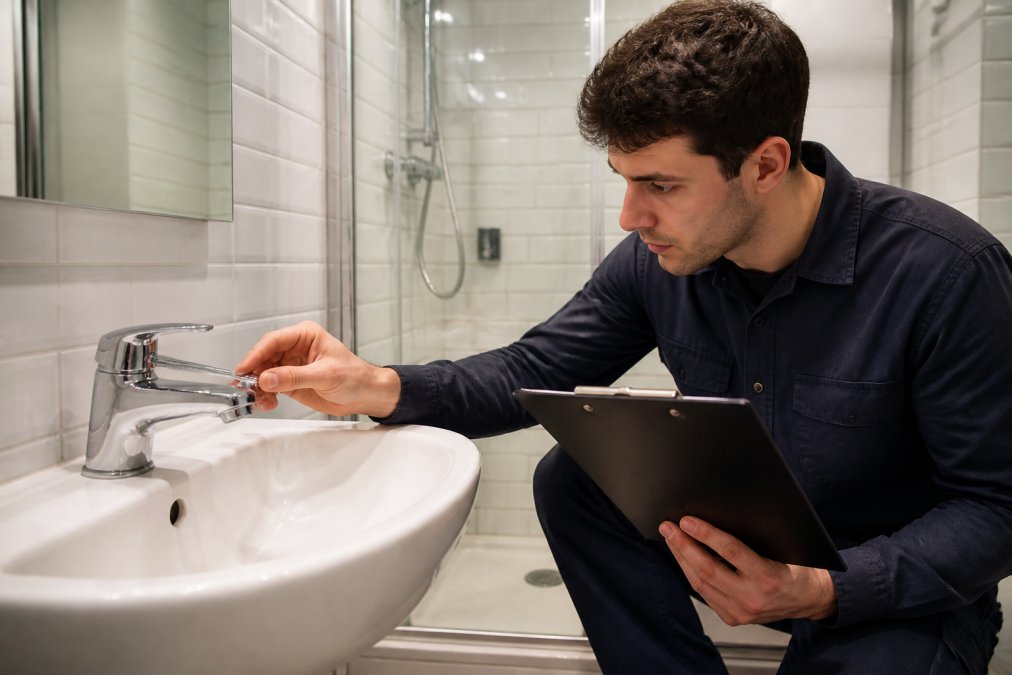
According to the National Apartment Association's guidance on unit turn best practices, a standardized inspection process directly reduces the number of incomplete turns that require re-entry and additional scheduling.
Mechanical Systems and HVAC
HVAC maintenance is non-negotiable every turn. Student residents rarely report filter changes or early-stage issues, so systems accumulate wear silently.
Inspect and document:
- Filter condition and replacement date
- Thermostat calibration and battery status
- Condensate drain line for blockages
- Blower motor and belt condition
- Refrigerant line insulation integrity
- Supply and return vent covers for damage or obstruction
Standardize your HVAC filter SKU across the entire portfolio. A single filter size means technicians carry one part instead of four, and inventory tracking stays clean.
Bathroom Fixtures and Plumbing Components
Bathrooms generate more maintenance callbacks than any other area in student housing. Faucet cartridges, toilet flappers, showerhead flow restrictors, and supply lines all degrade under heavy use.
Inspect and document:
- Faucet handles and cartridges for drips or stiffness
- Toilet fill valve, flapper, and flush handle operation
- Showerhead flow and mineral buildup
- Angle stops and supply lines for corrosion or weeping
- Caulk lines at tub surround, toilet base, and vanity backsplash
- Drain covers and stoppers for damage or missing hardware
- Exhaust fan operation and grille cleanliness
Standardizing maintenance parts is most impactful in the bathroom. When every unit uses the same faucet platform, a technician can carry a single pre-kitted repair set that covers every likely failure point without a return trip.
Furniture, Fixtures, and Electrical Gear
Student housing takes harder use than conventional multifamily. Contract furniture specified for institutional use holds up significantly better than residential-grade pieces.
Inspect and document:
- Light fixture operation and bulb type consistency
- GFCI outlet function in bathrooms and kitchens
- Door hardware, closers, and deadbolts
- Cabinet door hinges and drawer slides
- Furniture frame integrity and surface condition
- Window locks and screen condition
Standardizing electrical gear, particularly outlet covers, switch plates, and bulb types, reduces SKUs your team stocks and speeds up the electrical portion of every turn.
How to Build a Standardized Parts Inventory System
Building a standardized parts inventory system means moving from reactive purchasing to centralized operations with predictable cost control.
Step 1: Audit Your Current Parts Across All Units
Start with a full asset audit. Walk every unit type in your portfolio and document the make, model, and age of every fixture that drives maintenance volume: faucets, toilets, showerheads, HVAC filters, light fixtures, and door hardware.
Most student housing portfolios accumulate fixture brands over years of deferred standardization. Identify which fixture platforms appear most frequently and which are serviceable with OEM-grade components still available. Select a single approved platform per fixture category, prioritizing platforms with broad parts availability, established supply chains, and long product lifecycles.
Step 2: Establish Approved Parts Lists and Work Order Templates
An approved parts list specifies the exact SKU, brand, and specification for every component your team is authorized to install. Pair it with work order templates for every common repair type. A bathroom faucet repair template should list the approved cartridge SKU, supply line, and caulk, along with expected labor time. This eliminates technician-level decision-making and creates a compliance tracking record.
Digital maintenance platforms make this significantly easier by integrating work order templates with inventory tracking.
Step 3: Set Par Levels and Manage Long-Lead Items
Par levels define the minimum quantity of each approved part you keep on hand at all times. Set them based on historical repair frequency, portfolio size, and supplier lead times.
Long-lead items deserve special attention. Some OEM-grade components, particularly specialty faucet cartridges and HVAC parts, can have lead times of two to four weeks during peak demand. Identify these during your audit and maintain higher par levels to avoid turn delays. As the Facilities Management Journal's guidance on inventory planning notes, proactive par-level management prevents maintenance workflow disruptions during high-demand periods.
Preventive Maintenance for Student Housing: A Proactive Framework
Preventive maintenance is a scheduled program of inspections and component replacements designed to prevent failures before residents report them. A reactive model costs more per repair, generates more callbacks, and creates worse resident experiences.
The framework has four elements:
-
Annual deep inspection. Conduct a full unit inspection at every lease renewal. Catching a failing fill valve or corroded angle stop before it becomes a water damage event is cost-effective maintenance.
-
Seasonal HVAC service. Schedule filter replacements, coil cleaning, and condensate drain clearing before peak heating and cooling seasons. Student housing HVAC systems run hard, and deferred service accelerates component failure.
-
Sanitation protocols at every turn. Standardize cleaning and sanitation procedures alongside parts procedures. Consistent protocols reduce mold and mildew callbacks.
-
Compliance tracking. Maintain a digital record of every inspection, repair, and part installed. This creates an asset lifecycle record for each unit that informs future capital planning and supports compliance with local habitability standards.
Preventive maintenance works best when systematized, not left to individual technician judgment. SOPs should define what gets inspected, when, by whom, and with what tools.
Reducing Maintenance Turn Time with Standardized Parts Kits
The fastest turns happen when technicians walk into a unit knowing exactly what they'll find and carrying exactly what they need. Standardized parts kits make that possible.
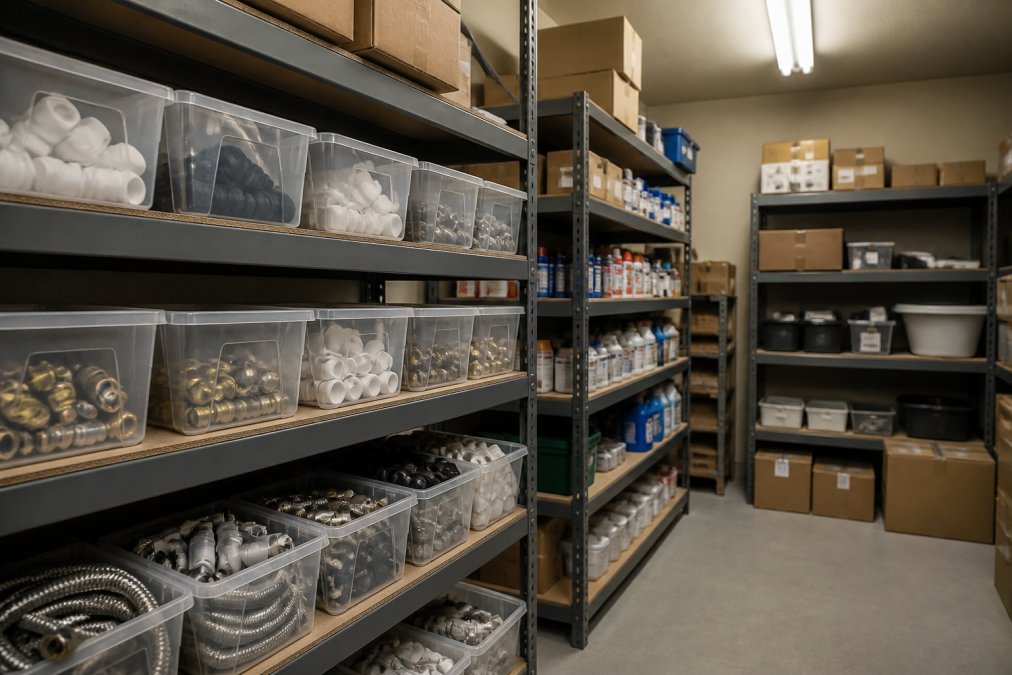
A parts kit is a pre-assembled collection of components most likely to be replaced during a standard unit turn. For a bathroom turn kit, that typically includes a faucet cartridge, toilet fill valve and flapper, showerhead, angle stop supply lines, and caulk. Everything arrives in a single box, ready to deploy.
Ready Bathroom Solutions provides pre-kitted, OEM-grade maintenance kits designed to streamline bathroom repairs for property professionals. By consolidating all necessary parts into a single box, our solution eliminates time-consuming store runs and reduces costly maintenance callbacks.
If a technician saves 45 minutes per unit on parts-related delays across a 150-unit turn, that's more than 112 hours of recovered labor, a meaningful reduction in your turn timeline and labor cost per unit.
The table below summarizes core bathroom turn kit components:
| Component | Failure Mode It Prevents | Replacement Frequency |
|---|---|---|
| Faucet cartridge | Dripping, stiff handle operation | Every 2-3 turns or on condition |
| Toilet fill valve and flapper | Running toilet, incomplete flush | Every 2 turns or on condition |
| Showerhead | Low flow, mineral buildup | Every 2-3 turns or on condition |
| Angle stop supply lines | Corrosion, weeping connections | Every 3-5 years or on condition |
| Caulk (tub and vanity) | Mold, water intrusion | Every turn |
Lifecycle Cost Analysis and Sustainability in Parts Procurement
Most maintenance teams evaluate parts on purchase price. The right metric is total cost of ownership over the component's serviceable life, which includes purchase price, installation labor, callback frequency, and disposal cost.
A lower-cost faucet cartridge that fails after 18 months costs more than a higher-cost OEM-grade cartridge that lasts four years, once you factor in additional replacement labor and resident disruption. Lifecycle cost analysis makes this visible in a way that per-unit purchase price never does.
According to the EPA's Sustainable Purchasing Guide for facilities managers, procurement decisions that account for durability and end-of-life disposal costs consistently outperform lowest-bid purchasing on total cost over a five-year horizon.
Specifying WaterSense-certified fixtures reduces water consumption across the portfolio, lowering utility costs and supporting environmental compliance. Durable, contract-grade furniture and fixtures generate less waste than residential-grade alternatives requiring replacement every two to three years.
A standardized parts program consolidates supplier relationships, giving you more visibility into your supply chain and more negotiating leverage. Ordering the same SKUs in volume creates predictable demand that suppliers can plan around, reducing lead times.
Training Your Team on Standardized Parts and SOPs
Standardization only delivers its benefits if every technician executes it consistently. That requires deliberate training.
Training staff on standardized parts has three components:
-
Parts identification training. Every technician should identify the approved component for every fixture type by SKU and by sight. A brief hands-on session with physical samples eliminates the most common source of non-standard installations.
-
Installation procedure training. Standardized parts paired with standardized installation procedures produce consistent results. Walk technicians through the correct installation sequence for each fixture type, including torque specifications and caulk application technique.
-
Work order documentation training. A completed work order that accurately records what was installed is the foundation of your asset lifecycle data. Train technicians to document the specific part installed, supporting compliance tracking and future par-level decisions.
Build a short onboarding module covering approved parts, installation SOPs, and work order documentation, and run it for every new technician before their first turn. Portfolio management becomes significantly easier when your team operates from a shared, documented standard.
Ready Bathroom Solutions pre-kitted bathroom repair sets are designed to support standardized workflow. When the kit contains OEM-grade parts from established brands, your technicians are installing components they recognize, with installation characteristics they can learn once and apply consistently across every unit in your portfolio. Shop all bathroom kits to find the right configuration for your property type.
The challenge every maintenance director faces is converting a fragmented, reactive parts operation into a predictable, scalable system before the next turnover season arrives. Ready Bathroom Solutions addresses that directly with pre-kitted, OEM-grade bathroom repair sets that consolidate everything your team needs into a single box, eliminating store runs, reducing callbacks, and cutting per-unit turn time. Get started with Ready Bathroom Solutions and build the standardized maintenance program your portfolio has been missing.
Frequently Asked Questions
What are the benefits of standardizing maintenance parts in student housing?
Standardizing maintenance parts for student housing means every technician pulls from the same approved inventory, follows the same work order templates, and installs the same OEM-grade components. The result is faster unit turns, fewer callbacks from inconsistent installations, and simpler vendor management. It also makes training new staff significantly easier because there are no judgment calls about which part fits which unit, the approved parts list answers that question before anyone picks up a wrench.
How does part standardization reduce maintenance turn time?
When parts are pre-selected and stocked at par levels before turnover season begins, technicians skip the store runs and supplier calls that stall repairs. A standardized parts kit for bathroom repairs, for example, consolidates everything into one box. That eliminates the multi-stop sourcing process and cuts the gap between move-out inspection and unit ready status. Properties that standardize parts typically complete punch list items in fewer trips per unit, which compounds across a large portfolio into significant labor savings.
What should be included in a standard maintenance kit for student housing bathrooms?
A complete bathroom maintenance kit for student housing should cover the highest-frequency failure points: faucet cartridges and aerators, supply line connectors, fill valves and flappers, showerhead components, drain assemblies, and caulk or sealant. OEM-grade parts from established brands ensure compatibility and durability. Pre-kitting these components together means a technician arrives with everything needed to complete a full bathroom turn without a second trip, which is where most turn-time delays actually occur.
Why is preventive maintenance critical for student housing longevity?
Student housing units absorb heavy use over a short lease cycle, typically nine to twelve months, then face an intensive turnover. Without a preventive maintenance schedule, covering HVAC filters, plumbing components, electrical gear, and durable furniture, minor wear compounds into major repairs by move-out. Preventive maintenance for student housing extends the serviceable life of fixtures, reduces emergency work orders during the academic year, and keeps asset lifecycle costs predictable across the portfolio.
This article was written using GrandRanker