

Table of Contents
- How to Identify Your Delta Faucet and Find Replacement Parts
- Delta Faucet Model Number Lookup: Step-by-Step
- Common Delta Faucet Replacement Parts and When to Replace Them
- Delta Faucet Replacement Cartridge: Compatibility and Selection
- Delta Faucet Repair Kit: What's Included and How to Choose
- Using a Delta Faucet Parts Diagram to Identify Components
- Where to Source Replacement Parts: Official, Hardware Stores, and Specialists
- Checking Compatibility Before Ordering Replacement Parts
- Frequently Asked Questions
Last Updated: October 10, 2026
How to Identify Your Delta Faucet and Find Replacement Parts
Finding the right replacement delta faucet parts starts with knowing your faucet model. The wrong part wastes labor hours, delays unit turnover, and creates costly callbacks. At Ready Bathroom Solutions, we help facilities teams identify and source the exact components they need the first time.

Locating Your Faucet Model Number
Your Delta faucet's model number is the key to everything. This eight-digit code appears on a label attached directly to the faucet body, usually on the underside or back of the fixture. For single-handle models, check behind the handle or on the escutcheon plate. For double-handle faucets, the label typically sits between the two handles or underneath the spout.
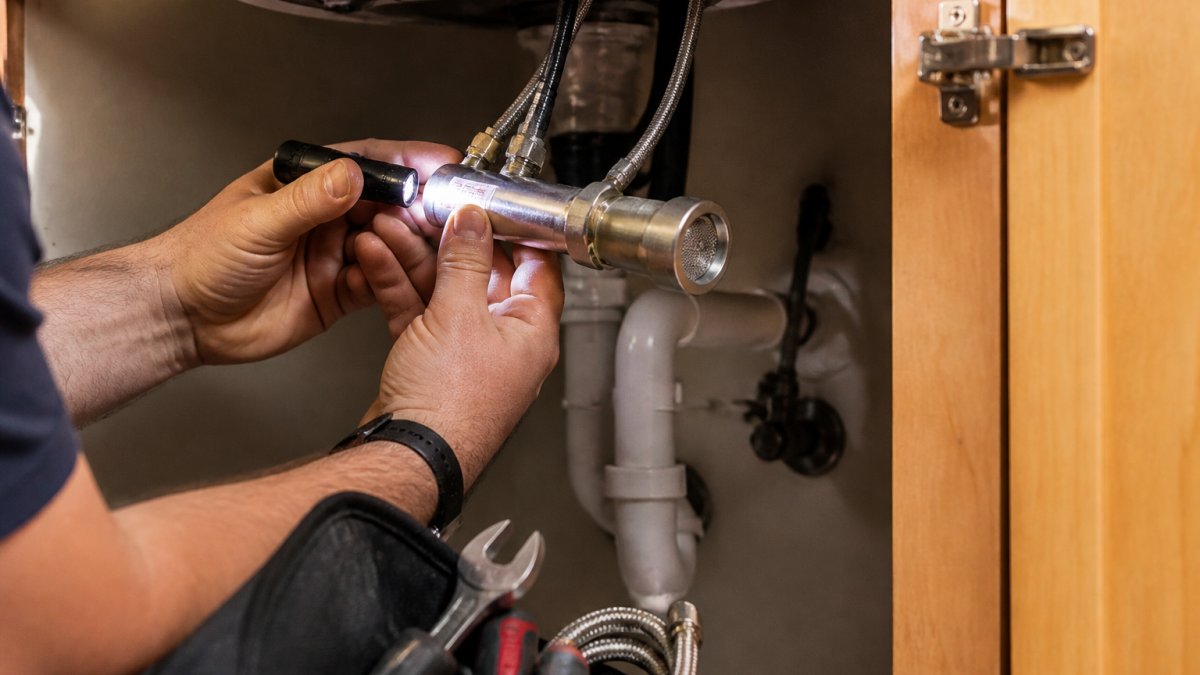
To locate it: turn off water, remove decorative caps, and use a flashlight to inspect all surfaces. Write down the full model number, this identifier determines which replacement delta faucet parts will fit your fixture.
Understanding Faucet Type and Configuration
Delta faucets come in three configurations: single-handle (one lever), double-handle (separate hot/cold), and widespread (handles several inches apart). Kitchen and bathroom faucets use different cartridge assemblies, a kitchen cartridge won't fit a bathroom vanity. Document your faucet's location and type alongside the model number to prevent ordering incompatible components.
Delta Faucet Model Number Lookup: Step-by-Step
Visit the official Delta Faucet website and enter your eight-digit code into their parts finder tool for exact specifications and compatible replacement delta faucet parts. If you can't locate the label, contact Delta customer support with a photo. For teams managing multiple properties, keep a spreadsheet of model numbers to order parts immediately when leaks occur.

Common Delta Faucet Replacement Parts and When to Replace Them
Most Delta faucet failures trace back to a few components. Connecting symptoms to the failing part helps you order the correct replacement the first time.
Cartridges and Valve Components
The cartridge houses the valve mechanism controlling water flow and temperature. A failing cartridge causes drips, leaks, inconsistent temperature, or water that won't shut off. Most cartridges last five to ten years depending on water quality and usage.
Symptoms that point to a failing cartridge:
- Water drips from the spout even when the handle is fully off
- Hot water takes 30+ seconds to reach the faucet after turning the handle
- Temperature swings wildly between hot and cold with small handle movements
- The handle feels stiff or requires excessive force to move
- Water leaks from underneath the sink after you've tightened the packing nut
Replacing a Delta faucet replacement cartridge costs $30-$75 and eliminates the most common bathroom leak complaint. The cartridge pulls straight out after removing the handle and trim ring; installation takes fifteen minutes for experienced maintenance staff.
O-Rings, Seals, and Sprayers
O-rings and seals deteriorate from water exposure and temperature cycling. When they fail, you see drips at the spout base or leaks underneath the sink. Replacing them costs $5-$15 per component.
Symptoms that point to failing O-rings or seals:
- Water drips from the base of the spout when the faucet is off
- Wet cabinet underneath the sink with no visible cracks in supply lines
- Dripping occurs only at the spout base, not from the handle area
- The leak worsens after you've already replaced the cartridge
Sprayer heads and diverter valves redirect water between spout and showerhead. Sprayers clog with mineral deposits; diverters fail when the lever sticks or water flows to both destinations. Both are straightforward replacements taking under ten minutes.
Symptoms that point to sprayer or diverter problems:
- Water pressure from the kitchen sprayer is noticeably weaker than from the spout
- Sprayer mist is uneven or comes out in a single stream
- Water continues flowing from the spout when you pull the sprayer trigger
- The diverter lever is stuck or requires excessive force
- Water flows from both the spout and showerhead simultaneously (bathroom faucets)
For high-traffic properties, replacing O-rings and seals during routine cartridge changes prevents future leaks. This preventive approach reduces emergency calls and extends faucet life by years.
Delta Faucet Replacement Cartridge: Compatibility and Selection
Not all Delta replacement cartridges fit all Delta faucets, a single-handle cartridge won't work in a double-handle configuration. Your model number determines your cartridge type; RP (replacement part) numbers indicate compatible cartridges. Always verify the RP number matches your faucet before ordering. For teams managing diverse inventories, keep a cross-reference list to prevent ordering errors.
Delta Faucet Repair Kit: What's Included and How to Choose
A Delta faucet repair kit bundles commonly needed parts, cartridge, O-rings, seals, sprayer component, into one box. Ready Bathroom Solutions offers pre-kitted OEM-grade solutions for property professionals, eliminating store runs and reducing labor hours. Verify the kit matches your faucet type and model before ordering.
Using a Delta Faucet Parts Diagram to Identify Components
Download parts diagrams from Delta's website by entering your model number. These exploded-view illustrations label each part with its part number and help pinpoint failing components. Print and keep diagrams with your model number spreadsheet to reduce installation time and prevent reassembly mistakes.
Where to Source Replacement Parts: Official, Hardware Stores, and Specialists
Three primary sourcing options exist for replacement delta faucet parts: official Delta channels, hardware retailers, and specialized supply companies. The right choice depends on your timeline, inventory needs, and budget.
Official Delta Channels
Delta's official website offers direct support. Advantages: guaranteed compatibility, discontinued parts access, direct support. Best for: property managers who can plan ahead or need discontinued models.
Traditional Hardware Retailers
Local and national hardware chains stock common Delta parts, primarily cartridges, O-rings, and sprayer heads. The advantage is immediate availability: you can walk in, confirm the part in hand, and install it the same day.
Advantages:
Tub Spout - Delta Faucet Classic Diverter Tub Spout →
- Same-day pickup eliminates shipping delays
- You can visually confirm the part matches your model before purchase
- Staff can sometimes help identify parts if you bring the old component
- Competitive pricing on high-volume items like cartridges
- Easy returns if you order the wrong part
Disadvantages:
- Limited inventory, specialty parts or less common models often unavailable
- Inconsistent stock across locations
- Staff knowledge varies; compatibility advice may be unreliable
- Aftermarket parts often mixed with OEM, creating confusion
- No bulk discounts for property managers
Best for: Single urgent repairs or when you need a part today and can verify compatibility yourself.
Specialized Supply Companies
Plumbing supply wholesalers and online specialists maintain deeper inventory and cater to professionals. These companies stock both OEM and aftermarket options, often with bulk pricing for property managers.
Advantages:
- Extensive inventory including hard-to-find parts and discontinued models
- Bulk discounts for property managers (10+ units)
- Fast shipping (often 2-3 business days)
- Knowledgeable support staff familiar with compatibility questions
- Pre-kitted solutions that bundle common parts together
- Account management for repeat customers
Disadvantages:
- Minimum order quantities on some items
- Account setup required (not available for one-off purchases)
- Aftermarket options require careful part-number verification
- Less familiar to DIY homeowners
Best for: Property managers with multiple units, recurring maintenance needs, or teams managing diverse fixture brands.
Genuine OEM Parts vs. Aftermarket Alternatives
Regardless of where you source, you'll encounter both OEM and aftermarket options. The choice carries real trade-offs.
OEM (Original Equipment Manufacturer) parts:
- Engineered to exact Delta specifications
- Backed by manufacturer warranty
- Longer typical lifespan (5-10 years for cartridges)
- Higher upfront cost ($40-$80 for cartridges)
- Lower callback risk in multi-unit properties
Aftermarket parts:
- Generic alternatives that fit Delta faucets
- Typically 30-50% cheaper than OEM
- Shorter typical lifespan (2-5 years)
- Limited or no warranty
- Higher failure rate, especially in hard-water areas
- More likely to require a second repair visit
For property managers, OEM parts can be a strategic choice when managing multiple units. An OEM cartridge can help prevent callbacks. For single-unit repairs or budget-constrained situations, aftermarket parts may be acceptable if you can tolerate higher replacement frequency.
Compatibility Verification Checklist Before Ordering
Regardless of source, always verify compatibility before purchasing. Use this checklist to prevent costly ordering mistakes:
- Confirm your exact model number, Eight-digit code on the faucet body (not the product name)
- Verify the part number, RP (replacement part) numbers must match your model exactly
- Check handle configuration, Single-handle, double-handle, or widespread (cartridges differ)
- Confirm faucet location, Kitchen vs. bathroom (different valve mechanisms)
- Note the finish, Chrome, brushed nickel, stainless (cosmetic parts only; internal parts are universal)
- Ask the seller directly, Provide your full model number and ask: "Will this part fit my model?"
- Review return policy, Confirm you can return unopened parts if compatibility is wrong
Contact the seller's customer support if compatibility information isn't obvious on the product page. A quick email or phone call prevents the frustration of receiving incompatible parts. For properties with mixed fixture brands, maintain a compatibility matrix in a shared spreadsheet. Document which parts work in which models across your portfolio. This reference sheet becomes invaluable when multiple units need repairs simultaneously.
Checking Compatibility Before Ordering Replacement Parts
Always verify compatibility before clicking purchase. A five-minute compatibility check prevents costly ordering mistakes. Use your model number to cross-reference the part number on the retailer's website. Most sites display compatibility information clearly.
Contact the seller's customer support if compatibility information isn't obvious. Provide your full model number and ask specifically whether the part fits your configuration. A quick email or phone call prevents the frustration of receiving incompatible parts.
For properties with mixed fixture brands, maintain a compatibility matrix. Document which parts work in which models across your portfolio. This reference sheet becomes invaluable when multiple units need repairs simultaneously.
Getting your replacement delta faucet parts right the first time keeps your units in service faster and your maintenance costs predictable.
| Component | Typical Lifespan | Replacement Cost | Difficulty |
|---|---|---|---|
| Cartridge | 5-10 years | $30-$75 | Moderate |
| O-rings/Seals | 3-5 years | $5-$15 | Easy |
| Sprayer Head | 4-7 years | $15-$30 | Easy |
| Diverter Valve | 5-8 years | $20-$40 | Moderate |
Frequently Asked Questions
How do I identify my Delta faucet model number?
The model number is typically stamped or printed on the faucet body, often located on the underside of the spout or on the valve cartridge itself. For kitchen faucets, check under the sink on the supply lines or the faucet base. For bathroom fixtures, look behind the handles or on the diverter. You can also find it on your original purchase documentation or warranty paperwork. Once you locate the model number, use it to search for replacement Delta faucet parts and ensure you order compatible components for your specific faucet configuration.
What's the difference between a Delta faucet replacement cartridge and a full repair kit?
A replacement cartridge is the internal valve mechanism that controls water flow and temperature; it's a single component you replace when your faucet leaks or loses pressure balance. A Delta faucet repair kit bundles multiple components, cartridges, O-rings, seals, springs, and sometimes diverters or sprayers, into one package designed to address multiple common failure points. Repair kits work best for property managers handling multiple units, as they reduce store runs and ensure all necessary parts are on hand. Single cartridge replacements suit targeted fixes when you know exactly which component has failed.
Can I use an aftermarket cartridge in my Delta faucet, or do I need genuine OEM parts?
Genuine OEM Delta cartridges are engineered to exact pressure-balance and temperature-control specifications. Aftermarket alternatives may fit. For property managers overseeing multiple units, OEM-grade components ensure consistent performance and reduce callback rates. While aftermarket parts cost less initially, the labor cost of repeat repairs and tenant complaints can be a factor. Pre-kitted OEM solutions from specialists can offer genuine parts at volume discounts.
What information should I have before ordering Delta faucet replacement parts?
Gather your faucet's model number, product category (kitchen, bathroom, single-handle, double-handle), and the specific symptoms (leak location, water temperature issues, low flow). Note whether your faucet has a diverter, sprayer, or hose attachment. Check your water supply type (standard or rough-in) and pipe size (typically 1/2 inch). If ordering for multiple properties, confirm whether all units use the same Delta model or if you need parts for different configurations. Having this information prevents ordering incompatible parts and ensures faster installation, reducing unit downtime.