

Table of Contents
- Why Apartment Unit Turns Cost More Than Most Teams Realize
- Average Apartment Unit Turn Time: What the Numbers Tell You
- Your Apartment Turnover Checklist: A Phase-by-Phase Breakdown
- Make-Ready Maintenance Best Practices That Cut Downtime
- How to Speed Up Apartment Unit Turns with Technology
- Apartment Turnover Cost Reduction: Where the Real Savings Hide
- Pre-Leasing, Compliance, and Resident Retention During Turns
- KPI Benchmarking: Tracking What Actually Improves Apartment Unit Turns
Last Updated: August 22, 2026
Why Apartment Unit Turns Cost More Than Most Teams Realize
Most property managers track vacancy days. Few track everything that feeds into them.
The real cost of a slow apartment unit turn isn't just lost rent, it's the compounding effect: a technician making three trips to the hardware store instead of one, a contractor who can't start because the punch list isn't finalized, a prospective resident who chose a competing property because your unit wasn't ready. Each moment has a dollar value.
At Ready Bathroom Solutions, we work with turns teams and facilities managers across multifamily portfolios. The teams that struggle most aren't understaffed or underfunded. They're running inefficient workflows that were never designed for speed.
Unit turn cost is the total expense of returning a vacant unit to rent-ready condition, including labor, materials, contractor fees, and carrying costs for every vacant day. Operational friction, not the work itself, is often the biggest driver of that cost.
The biggest inefficiencies are fixable. Below, we'll cover how to speed up apartment unit turns from inspection through pre-leasing, with a phase-by-phase checklist, technology recommendations, and KPI benchmarks to measure progress.
Average Apartment Unit Turn Time: What the Numbers Tell You
Industry benchmarks suggest that well-run properties target a turn time of seven days or fewer for standard units, with more complex renovations requiring two to three weeks. According to the National Apartment Association's operations resources, properties that regularly exceed 14 days on standard turns are leaving significant revenue on the table.
The gap between a seven-day turn and a 14-day turn almost never comes down to the work itself. It comes down to three things:
- Inspection delays: Move-out inspections that happen days after the resident leaves instead of same-day
- Procurement gaps: Technicians waiting on parts that weren't pre-staged
- Contractor scheduling: Flooring, paint, and cleaning crews showing up sequentially instead of in parallel
Understanding your current average turn time is the starting point.
Your Apartment Turnover Checklist: A Phase-by-Phase Breakdown
A reliable apartment turnover checklist is the operational backbone of every fast unit turn. Without one, every turn becomes an improvised process where things get missed, re-done, or delayed.
Move-Out Inspection and Documentation
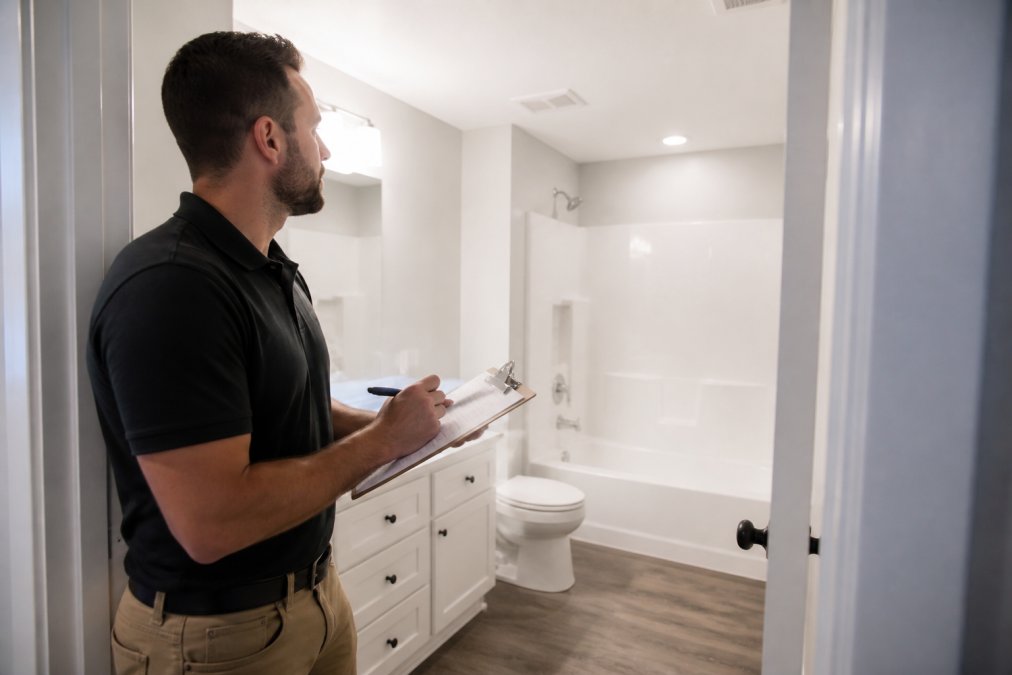
The move-out inspection should happen within 24 hours of the resident's departure. Document everything with photos and a standardized form to protect yourself legally and generate the scope of work for your technicians.
Key inspection tasks:
- Walk every room with a standardized checklist (walls, floors, fixtures, appliances)
- Photograph all damage before any cleaning or repairs begin
- Note any items left behind that require junk removal
- Assess HVAC filters, smoke detectors, and carbon monoxide detectors
- Check all plumbing fixtures for leaks, drips, or visible wear
- Document the condition of bathroom hardware, including faucets, shower valves, and toilet components
According to the U.S. Department of Housing and Urban Development's tenant rights guidance, landlords must follow specific procedures for security deposit deductions, and documentation is the foundation of any defensible claim.
Deep Cleaning and Junk Removal
Deep cleaning and junk removal should begin the same day as the inspection, or the morning after. Schedule your cleaning crew to work around early repair tasks, painters can work in the bedroom while cleaners handle the kitchen.
Deep cleaning scope for a standard unit turn:
- Full kitchen degreasing (appliances, cabinets, exhaust fans)
- Bathroom sanitization including grout, caulk lines, and fixtures
- Carpet cleaning or replacement assessment
- Window cleaning, blind inspection, and track cleaning
- HVAC vent cleaning and filter replacement
- Baseboard and door frame wipe-down
The bathroom is consistently the area where cleaning reveals hidden repair needs.
Repairs, Punch List, and Final Walk-Through
A disorganized punch list means technicians make multiple return visits and contractors wait on each other. Build your punch list from the move-out inspection documentation and prioritize repairs by trade so you can schedule contractors in parallel:
| Repair Category | Typical Priority | Can Run Concurrent With |
|---|---|---|
| Plumbing (leaks, fixtures) | Immediate | Cleaning crew |
| Paint and drywall | After plumbing | Flooring prep |
| Flooring | After paint dries | Appliance checks |
| Bathroom hardware/fixtures | During flooring | Final cleaning |
| Appliance repairs | Any phase | Most other trades |
The final walk-through should be conducted by a supervisor, not the technician who completed the work. Sign off only when every punch list item is verified closed.
Make-Ready Maintenance Best Practices That Cut Downtime
The biggest mistake in make-ready maintenance is treating every unit turn as a unique problem. The majority of repairs across a portfolio are predictable and repeatable: faucet cartridges, toilet flappers, showerheads, valve seats, drain assemblies.
When you standardize what you fix, you can standardize what you stock. That's where the real time savings come from.
Standardizing Supplies and Inventory for Faster Turns
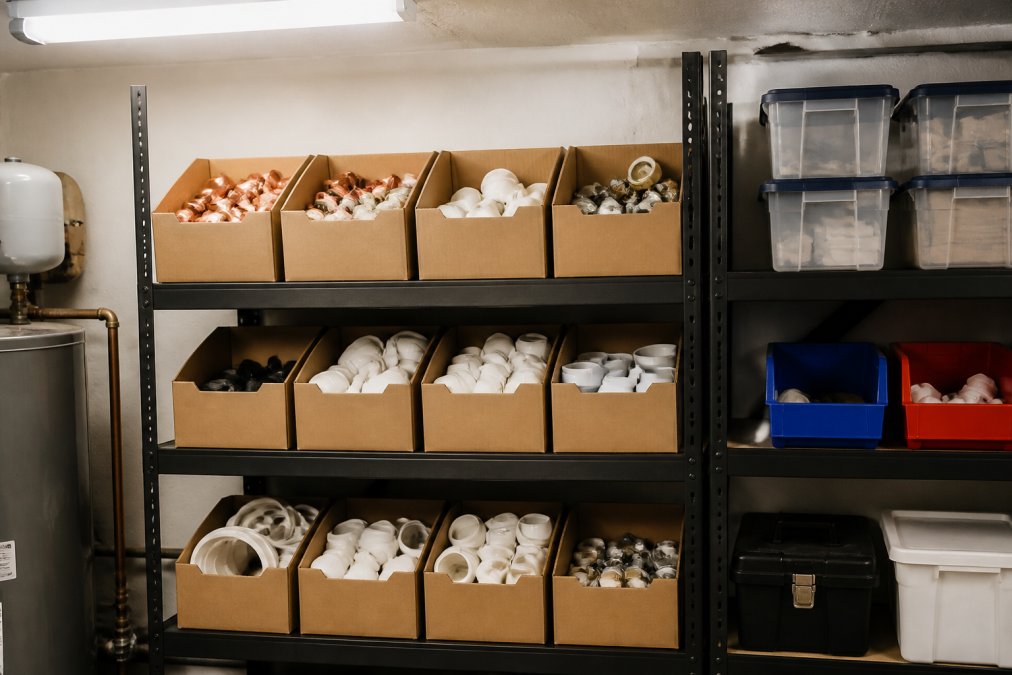
Standardized supplies means pre-determining the components used across your portfolio and stocking them before you need them. This single practice has a larger impact on turn time than almost any scheduling change.
Audit your portfolio to identify the two or three fixture brands that cover the majority of your units, and build your inventory around those. Most multifamily portfolios run on fewer fixture variants than teams assume.
Ready Bathroom Solutions addresses this directly with pre-kitted bathroom repair sets built around OEM-grade components from brands like Moen, Delta, and BrassCraft. The kits consolidate all necessary parts into a single box, eliminating the store run that typically costs a technician two to three hours per turn. For purchasing managers focused on cost optimization, bundle pricing delivers 15-20% savings compared to sourcing individual components.
Scheduling Contractors and Coordinating Vendors
Contractor coordination is the scheduling problem most teams underestimate. The default approach, one trade finishes, the next one starts, is slow by design.
Faster turns require parallel scheduling wherever the work allows it:
- Confirm availability 48 hours out, not the morning of
- Give contractors a unit-ready window, not an open-ended start time
- Build a vendor bench, not a single contractor relationship
- Track contractor completion times by vendor to identify which ones compress your turn time
How to Speed Up Apartment Unit Turns with Technology
Technology doesn't replace good process. It makes good process faster and more consistent.
The core tools that accelerate apartment unit turns fall into three categories:
Property management software with turn tracking: Platforms that allow you to assign, track, and close turn tasks in real time give supervisors visibility without requiring a physical walk-through for every status update.
Digital inspection apps: Digital inspection tools allow technicians to photograph damage, assign repair tasks, and generate punch lists from the unit itself. According to the Multifamily Housing Institute's technology adoption guidance, properties using digital inspection workflows report faster punch list generation and fewer missed repair items.
Turnover automation: Some property management systems now support automated notifications that trigger the next phase of work when the previous phase is marked complete, removing the coordinator bottleneck that typically costs 24-48 hours per turn.
Get your checklist standardized and your vendor relationships stable first, then layer in technology.
Apartment Turnover Cost Reduction: Where the Real Savings Hide
Apartment turnover cost reduction isn't primarily about negotiating lower contractor rates. The real savings are in three areas:
Reducing callbacks. A callback, where a technician has to return to a unit after it's been marked complete, resets the timeline and costs additional labor. Standardizing components and tightening the final walk-through process addresses both root causes: incorrect parts installed and incomplete work that passed inspection.
Eliminating store runs. A technician who leaves the property to source a part loses an average of two to three hours. Across a portfolio doing 20 turns per month, that's meaningful labor cost. Pre-staged inventory and pre-kitted supply solutions eliminate this waste entirely.
Shortening vacancy days. Every day a unit sits vacant after it's rent-ready is pure cost. Pre-leasing the unit before the turn is complete creates a hard deadline that compresses turn time more effectively than any process improvement.
Pre-Leasing, Compliance, and Resident Retention During Turns
Pre-leasing is the strategy of marketing and leasing a unit before the current resident has vacated. Done well, it eliminates the gap between a completed turn and a new move-in.
State landlord-tenant laws govern how quickly you must return security deposits, what deductions are permissible, and what notice you must provide. Review your state's specific statutes or consult with a property attorney before adjusting your deposit and inspection workflows.
A fast, professional turn process signals to departing residents that the property is well-managed, which protects your reputation and future occupancy rate. Send a move-out communication within 24 hours of departure confirming receipt of keys, provide a clear timeline for the security deposit return, and share the move-out inspection summary with the departing resident.
KPI Benchmarking: Tracking What Actually Improves Apartment Unit Turns
You can't improve what you don't measure. The teams that consistently run fast apartment unit turns track a small set of metrics that tell them exactly where time is being lost.
The essential KPIs for turn performance:
| KPI | What It Measures | Target Benchmark |
|---|---|---|
| Average turn time (days) | Total days from move-out to move-in ready | 7 days or fewer (standard units) |
| Callback rate | Percentage of turns requiring a return visit | Under 10% |
| Inspection-to-work-order time | Hours from inspection close to work order issued | Same day |
| Vendor on-time rate | Percentage of contractors arriving as scheduled | 90%+ |
| Vacancy loss per turn | Revenue lost per day of vacancy | Track monthly |
Review these metrics monthly, not quarterly. According to the National Apartment Association's benchmarking resources, properties that actively track and review turn KPIs consistently outperform those that manage turns reactively.
Callback rate is a more reliable indicator of turn quality than turn time alone. A team that completes turns in five days but has a 25% callback rate is actually running slower and spending more than a team that takes eight days and has a 5% callback rate.
Slow apartment unit turns are a solvable operations problem, not an inevitable cost of doing business. The biggest gains come from standardizing your inspection process, pre-staging supplies, and scheduling trades in parallel. Ready Bathroom Solutions supports this directly with pre-kitted, OEM-grade bathroom repair kits from brands like Moen, Delta, and BrassCraft, consolidating the parts your technicians need into a single box that eliminates store runs and reduces callbacks. Shop All Bathroom Kits and get your units back in service faster.
Frequently Asked Questions
How long should an apartment unit turn take?
For a standard unit with cosmetic repairs only, a well-run make-ready process typically takes 3 to 7 days. Units needing flooring replacement, appliance swaps, or bathroom repairs can run 10 to 14 days. The biggest driver of longer turns is waiting on parts or contractors. Teams that pre-stage standardized supplies and schedule vendors before move-out consistently hit the lower end of that range and reduce vacancy loss significantly.
What are the most common bottlenecks in the unit make-ready process?
The three most common bottlenecks are contractor scheduling conflicts, missing or wrong parts, and incomplete move-out inspections that delay scope-of-work decisions. Many teams lose one to three days simply waiting on a plumbing part or a specific fixture. Standardizing your inventory, especially for high-frequency repairs like bathroom hardware, eliminates most parts-related delays. Pre-kitted repair sets that consolidate all necessary components into one box are a direct fix for this problem.
What is the average cost of an apartment unit turn?
Turnover costs vary widely based on unit condition, market, and scope of work. Cosmetic-only turns can run a few hundred dollars, while turns requiring flooring, paint, and fixture replacements often reach $1,000 to $3,000 or more per unit. Vacancy loss from extended downtime adds to that figure daily. The clearest path to apartment turnover cost reduction is shortening turn time and reducing callbacks through standardized, quality parts the first time.
How can standardized maintenance kits reduce turnover time?
Pre-kitted maintenance sets eliminate the two most common time wasters: store runs and wrong-part orders. When a technician opens one box and finds every component needed for a bathroom repair, including OEM-grade parts from brands like Moen, Delta, and BrassCraft, they complete the job in one visit instead of two or three. That directly shortens the apartment unit turn cycle, reduces callbacks, and keeps your make-ready schedule on track across multiple units simultaneously.
This article was written using GrandRanker