

Table of Contents
- What Maintenance Supply Chain Efficiency Actually Means
- Key Performance Indicators That Matter for Your Properties
- Understanding the Cost of Maintenance Callbacks in Property Management
- Maintenance Inventory Management Best Practices
- Maintenance Supply Chain Optimization Tools and Systems
- Balancing Efficiency Gains with Supply Chain Resilience
- Implementing Change: Getting Your Maintenance Team On Board
- Conclusion: Turning Efficiency Into Faster Unit Turns
Last Updated: August 25, 2026
What Maintenance Supply Chain Efficiency Actually Means
Maintenance supply chain efficiency refers to the optimization of how materials, parts, and labor flow through your maintenance operations to complete repairs faster and at lower cost. For property managers overseeing multifamily complexes, hotels, or student housing, this is the difference between a unit sitting vacant for three days and being market-ready in eight hours.
The core problem most teams face is fragmentation. A maintenance technician needs a pressure valve, cartridge, and fittings. Instead of having these items staged and ready, they spend 90 minutes driving to a supply house, waiting in line, and driving back. That's wasted labor hours that directly impact your unit turnover timeline and operational costs.
At Ready Bathroom Solutions, we provide pre-kitted, OEM-grade maintenance kits designed to streamline bathroom repairs for property professionals. The teams that win at maintenance supply chain efficiency share one thing in common: they've eliminated the hunt. They've pre-staged the parts they need, standardized what those parts are, and built systems that reduce decision-making friction.
Key Performance Indicators That Matter for Your Properties
You need metrics that show whether your supply chain is actually enabling faster unit turns.
Perfect order index measures whether every part needed for a repair arrives on time, in the correct quantity, and in working condition. A score of 95% means one in every 20 maintenance calls involves a missing or defective part. Track this weekly by property and by repair type.
Inventory turnover ratio tells you how many times per year you're cycling through your maintenance parts stock. For pre-kitted systems, aim for 8-12 depending on property size.
Supplier lead time is how long it takes from order to delivery. Knowing this number lets you order ahead and maintain supply chain visibility without overstocking.
Maintenance callback rate is your most honest efficiency metric. A callback means the first visit didn't fully resolve the issue. Track callbacks by repair type and by technician. This data shows which parts combinations need to be pre-kitted together.
Understanding the Cost of Maintenance Callbacks in Property Management
A callback isn't just a second service call. It's a cascade of costs that most property managers underestimate.
When a technician returns to fix what they missed, you're paying for their time twice. But you're also delaying unit turnover. If a unit was supposed to be market-ready on Friday but the callback happens Monday, you've lost three days of rental revenue. For a 200-unit property with average rent of $1,500 per unit, that's $9,000 in lost revenue per callback (census.gov).
Callbacks typically stem from three sources: wrong part ordered, part arrived defective, or technician lacked the complete kit needed for that repair type. Pre-kitted systems address all three. When you consolidate the exact parts needed for a bathroom repair into a single box, you eliminate guesswork.
A property manager overseeing five properties with 40 units each (200 units total) might experience 30-40 callbacks per month if ordering parts ad-hoc (peer-reviewed research). Reducing that to 5-8 callbacks per month saves roughly 100-150 technician hours per year. At $35-45 per hour loaded labor cost, that's $3,500-$6,750 in direct labor savings, plus the rental revenue recovery from faster unit turns (bls.gov).
Maintenance Inventory Management Best Practices
Most property managers approach inventory reactively, scrambling when stock runs out. This creates constant crisis and forces expensive expedited orders.
The first principle is demand forecasting. Look at your historical data: which repairs happen most frequently? Once you know your actual demand pattern, you can stage inventory in advance.
The second principle is consolidation into pre-kitted units. Instead of maintaining 30 different SKUs scattered across your warehouse, consolidate into 5-8 pre-kitted bathroom repair sets. Each kit contains the exact parts needed for one common repair scenario. This cuts inventory management overhead and reduces decision-making time for technicians.
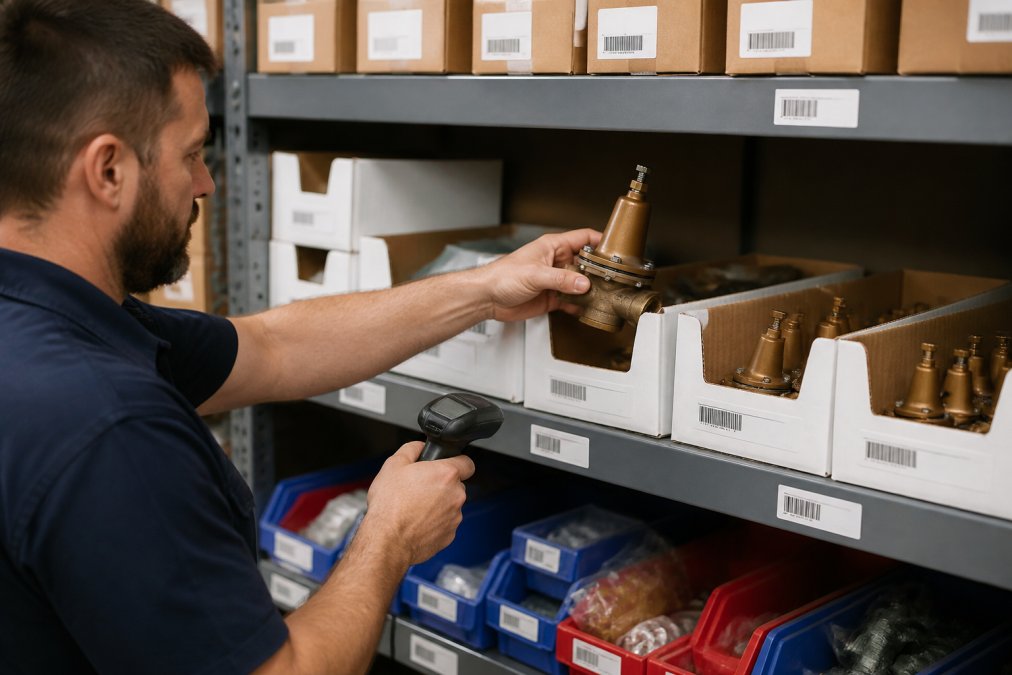
The third principle is redundancy reduction. Use your supplier lead time data to determine minimum stock levels. If your lead time is 7 days and you experience 4 cartridge replacements per week, you need 28 cartridges on hand plus a small buffer.
The fourth principle is real-time monitoring. A simple spreadsheet or inventory management software tracks stock levels and flags when to reorder. The key is discipline: update it weekly and stick to reorder points.
For properties managing multiple locations, standardization becomes critical. Standardizing across your portfolio, or at least across properties with similar fixtures, dramatically simplifies supply chain operations. Ready Bathroom Solutions' pre-kitted approach bundles OEM-grade parts from brands like Moen, Delta, and BrassCraft in configurations that work across multiple property types.
Maintenance Supply Chain Optimization Tools and Systems
The right tools reduce friction without adding complexity.
Inventory management software is the foundation. For small portfolios (under 100 units), a well-structured spreadsheet works. For larger operations, dedicated software provides real-time visibility, automated reorder alerts, and reporting.
Barcode tracking eliminates guesswork. When a technician pulls a pre-kitted bathroom repair set, they scan it. The system automatically updates inventory and flags when stock falls below reorder points.
Decision support systems embedded in your workflow reduce callbacks. When a technician enters a work order for a cartridge replacement, the system recommends the specific pre-kitted set needed for that fixture type.
Preventive maintenance scheduling creates predictable demand that you can plan for, reducing emergency orders and stockouts.
Data-driven decision making means tracking which repairs repeat most frequently and which parts fail prematurely. Fixing root problems prevents future failures and reduces your supply chain burden.
Balancing Efficiency Gains with Supply Chain Resilience
Efficiency and resilience are not opposites. The most efficient supply chains are also the most resilient.
The trap is over-optimizing for cost. A supply chain with zero buffer inventory looks efficient on paper but becomes fragile when disruptions occur.
Supply chain resilience means maintaining enough flexibility to absorb disruptions without sacrificing efficiency. Dual sourcing for critical parts provides backup if your primary supplier misses a deadline. Safety stock for high-frequency items like cartridges and washers costs almost nothing but protects you from demand spikes. Supplier diversification across your portfolio creates redundancy. Real-time visibility into supplier performance lets you switch before it becomes a crisis.
The goal is acceptable risk. You're trading a small amount of efficiency for the ability to absorb disruptions without halting operations.
Implementing Change: Getting Your Maintenance Team On Board
This is where most efficiency initiatives fail. You can design the perfect system, but if your technicians resist it, you've wasted your time.
Frame pre-kitted systems as enabling better work, not restricting it. The message is: "We're removing the part-hunting burden so you can spend more time actually fixing things."
Start with a pilot. Pick one property with one repair type. Use it for 30 days. Track callback rates, labor hours, and technician feedback. Make adjustments based on what you learn.
Involve technicians in kit design. Ask your experienced technicians: "What parts do you always grab together for a cartridge replacement?" When they see their recommendations reflected in the kits, they own the system.
Measure and communicate results. After 30 days, share the data. Concrete results build buy-in.
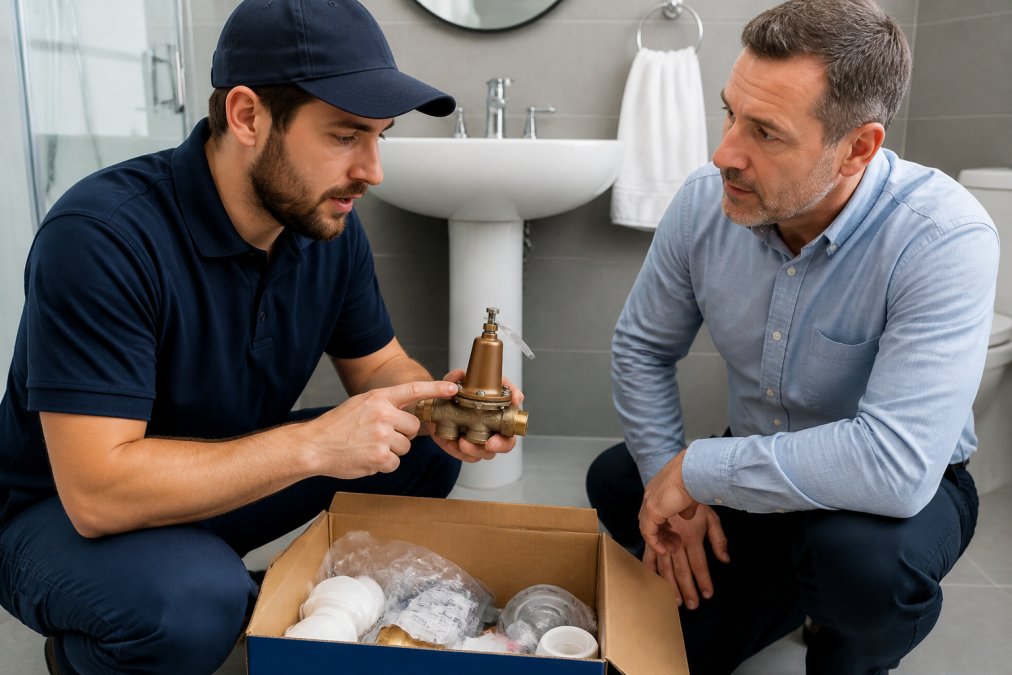
Invest in training. Spend 30 minutes with each technician walking through the new kits. Training signals that you're serious about this change and that you respect their expertise.
The adoption timeline for maintenance teams is typically 60-90 days. By day 90, most teams are operating at full efficiency.
Conclusion: Turning Efficiency Into Faster Unit Turns
Maintenance supply chain efficiency is the operational backbone of unit turnover speed.
The property managers winning in 2026 are the ones who've systematized their maintenance operations. They've eliminated the hunt for parts, standardized repair kits, and built real-time visibility into inventory.
Ready Bathroom Solutions helps you execute this strategy with pre-kitted, OEM-grade maintenance sets designed specifically for bathroom repairs. Our kits consolidate all necessary parts, pressure-reducing valves like the WATTS REGULATOR CO 3/4 in. Pressure Reducing Valve, cartridges, fittings, and fasteners, into single boxes that eliminate store runs and reduce callbacks. The result is faster unit turns, standardized quality across your portfolio, and measurable labor savings.

Start with one property, one repair type. Measure callback rates, labor hours, and technician feedback. Let the data guide your next decision.
Frequently Asked Questions
Q: How do you measure maintenance supply chain efficiency?
A: Maintenance supply chain efficiency is measured using several key metrics: perfect order index (orders delivered on time, complete, and damage-free), inventory turnover ratio, order fulfillment cycle time, and callback rates. For property professionals, tracking how quickly repairs get completed and how often callbacks occur reveals whether your supply chain supports fast unit turns. Monitoring these metrics shows whether your current approach creates bottlenecks or supports operational efficiency.
Q: What are the key performance indicators for maintenance inventory?
A: The most critical KPIs are inventory turnover ratio (how quickly parts move through stock), supplier lead time (how long before replacement stock arrives), cost per unit turn, and callback rate percentage. For multifamily and hospitality properties, tracking the time between identifying a repair need and completing it, from parts availability to installation, reveals whether your inventory strategy supports demand forecasting and throughput. Properties managing multiple units benefit from benchmarking these metrics across all locations to identify which properties have the strongest performance.
Q: How can pre-kitted parts improve maintenance supply chain efficiency?
A: Pre-kitted maintenance solutions eliminate the time spent shopping for individual parts, reduce decision delays, and ensure all necessary components arrive together. This cuts cycle time significantly because technicians spend less time sourcing materials and more time on repairs. Pre-kitted systems also support preventive maintenance schedules by standardizing which parts are used for common repairs, reducing waste and ensuring consistent quality. The Pressure Control Valve from WATTS REGULATOR CO and other OEM-grade components in pre-assembled kits help properties maintain asset lifecycle management and reduce costly callbacks.
Q: What are the most common bottlenecks in maintenance supply chains for properties?
A: The largest bottlenecks are: store runs and sourcing delays, inconsistent part availability across multiple properties, lack of real-time visibility into inventory levels, and poor vendor performance tracking. Many properties also struggle with supplier relationship management when dealing with multiple vendors, creating communication delays. Addressing these requires data-driven decision making, establishing clear procurement optimization processes, and implementing decision support systems that give teams visibility into what parts are available before they start a repair.
The challenge isn't knowing what to do, it's executing consistently across multiple properties with different teams. Ready Bathroom Solutions removes that execution friction by providing standardized, pre-kitted solutions that your team can deploy immediately. Shop all bathroom kits and see how consolidation reduces your maintenance callbacks while accelerating unit turnover.
This article was written using GrandRanker