

Table of Contents
- BrassCraft Shut Off Valve Review: Angle Stop Models Compared
- BrassCraft Compression Valve Sizes and Connection Compatibility
- Multi-Turn vs. Quarter-Turn Shut-Off Valve: Which Turns Faster
- BrassCraft Push-Connect Valve Installation and Replacement Steps
- Durability, Maintenance, and Expected Service Life
- Price and Value: What Each BrassCraft Shut Off Valve Costs
- Which BrassCraft Shut Off Valve Should Property Teams Buy?
- Frequently Asked Questions
Last Updated: October 7, 2026
BrassCraft Shut Off Valve Review: Angle Stop Models Compared
A BrassCraft shut off valve is a supply stop that controls water flow to a single fixture, letting you cut off the supply for repairs without draining the whole system. At Ready Bathroom Solutions, we stock these valves because property teams replace them constantly during unit turns, and the wrong model means a second trip to the unit.
BrassCraft has made supply stops for decades, and the brand shows up in multifamily, hospitality, and student housing maintenance closets everywhere. But "BrassCraft" is not one valve. The line splits into angle stops, straight stops, multi-turn and quarter-turn bodies, and several connection types. Choosing badly costs you labor, not just parts money.
Below, we compare the angle stop models we carry, break down compression sizing, explain when a quarter-turn beats a multi-turn, and walk through installation. The three valves in this review run from $6.89 to $17.97, so the price gap is real, and so is the difference in where each one belongs.
Here is the short version before the details:
| Model | Size | Connection | Price | Best For |
|---|---|---|---|---|
| BrassCraft G2CR09X C | 1/2 x 1/4 in. | Compression x OD Compression | $17.97 | Commercial sink and toilet supply lines |
| PROFLO PFXAC32C | 5/8 x 3/8 in. | OD Compression | $7.05 | Standard residential toilet and faucet feeds |
| PROFLO PFXQAP32C | 1/2 x 3/8 in. | MPT x Compression | $6.89 | Quick swaps where the stub-out is threaded |
BrassCraft Compression Valve Sizes and Connection Compatibility
Compression valve sizes are written as two numbers, and both matter. The first number is the inlet that threads onto the stub-out coming out of the wall or floor. The second is the outlet that feeds the fixture supply line.

The sizing language trips people up because nominal compression size and actual outside diameter are not the same thing. A 1/2-inch nominal compression fitting does not measure 1/2 inch across the pipe. It refers to the tube size the ferrule is designed to grip.
Connection types you will see on these valves:
- Compression: a nut and ferrule squeeze onto copper or plastic tubing. The most common inlet on residential stub-outs.
- OD Compression: the outlet side, sized to the outside diameter of the fixture supply tube.
- MPT: male pipe thread, which threads into a female fitting rather than onto bare tubing.
- Barbed: pushes into flexible tubing, used on some plastic supply lines.
The three models we stock cover the common combinations. The PROFLO PFXAC32C is a 5/8 x 3/8 in.

Measure twice here. According to the Uniform Plumbing Code overview from the International Association of Plumbing and Mechanical Officials, supply stop connections must match the piping material and size they serve, and mismatched fittings are a leading cause of small leaks behind walls.
Multi-Turn vs. Quarter-Turn Shut-Off Valve: Which Turns Faster
A quarter-turn shut-off valve opens and closes with a 90-degree turn of the handle, while a multi-turn valve needs several full rotations to seat or unseat. That single difference decides how fast a technician can isolate a fixture during an emergency.
For property maintenance, quarter-turn wins on speed. When a toilet supply line bursts at 2 a.m., the person on call needs the water off in one motion, not five rotations while the floor floods.
Multi-turn valves use a stem and washer that compresses against a seat. They cost less and they are common in older buildings, but they have a known failure mode. The packing nut and stem washer wear over time, and a valve that has not been turned in years often seizes or weeps when someone finally touches it.
Here is how the two compare in practice:
| Factor | Quarter-Turn | Multi-Turn |
|---|---|---|
| Operation | 90-degree handle turn | Several full rotations |
| Mechanism | Ball valve | Stem and washer |
| Speed to isolate | Fast, one motion | Slower, multiple turns |
| Wear points | Ball and seats | Washer, packing, stem |
| Best for | High-turnover units, emergency shutoff | Low-traffic lines, budget replacements |
Our recommendation for portfolio work is quarter-turn on anything a resident or guest can reach. The labor saved during a single emergency pays for the price difference across a whole building.
BrassCraft Push-Connect Valve Installation and Replacement Steps
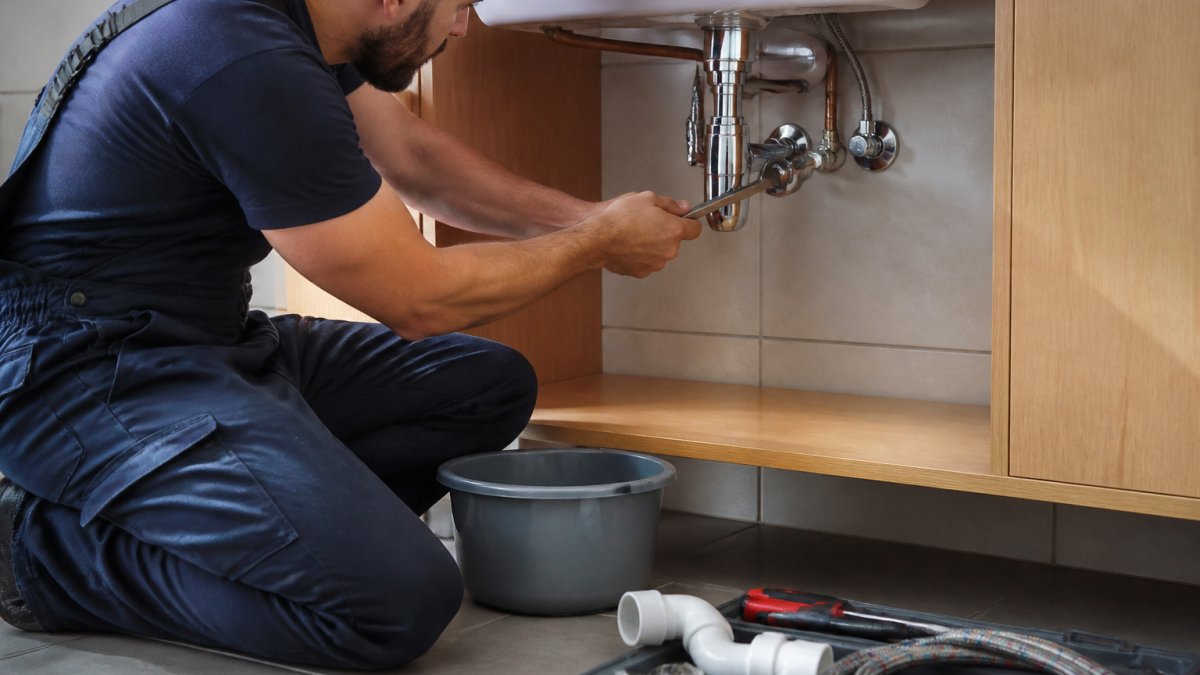
The steps below apply to any supply stop, compression or push-connect, and they are the sequence we would hand a new technician on day one.
- Shut off the main water supply and open the lowest fixture in the building to drain the lines.
- Place a bucket under the valve and lay towels to protect the cabinet floor.
- Loosen the outlet nut and disconnect the fixture supply line.
- Hold the valve body with one wrench and loosen the inlet nut with a second. Never twist the valve by its body alone.
- Remove the old valve and inspect the stub-out for corrosion or burrs.
- Clean or cut the tube square, then deburr the inside and outside edges.
- For compression, slide the nut and ferrule on, then tighten the nut finger-tight plus a quarter to a half turn with a wrench.
- Reconnect the fixture supply line and hand-tighten, then snug with a wrench.
- Restore water slowly and watch the connection for a full minute before closing up the cabinet.
The EPA's WaterSense program guidance on fixing leaks notes that a slow supply-line leak can waste thousands of gallons a year, which is why we treat every stop replacement as a leak-prevention job, not just a part swap.
Angle Stop Valve - BrassCraft G2CR09 Series 1/2 x 1/4 in. Compression x OD →
Durability, Maintenance, and Expected Service Life
Supply stops are wear items, not permanent fixtures, and most fail from lack of use rather than overuse. A valve that never gets turned develops a stiff stem or a dried-out washer, and the first time someone operates it during an emergency, it leaks.
Brass bodies with chrome plating resist corrosion well in normal household water, and the models we carry are rated for 40 to 160°F operating conditions. That range covers typical supply-line temperatures in apartments, hotels, and student housing.
A simple maintenance habit extends service life considerably. Once a year, close and reopen every supply stop in a unit a quarter turn, then return it to fully open. This keeps the mechanism free and tells you which valves are already stiff before an emergency finds them.
- Replace any valve that weeps at the stem after tightening the packing nut.
- Replace valves with visible green or white corrosion at the threads.
- Replace multi-turn valves that need more than normal force to close.
- Inspect stops during every unit turn, not only when a leak is reported.
For property teams, the practical takeaway is to treat stops as part of a turnover checklist. A valve that costs a few dollars is cheap insurance against a water damage claim.
Price and Value: What Each BrassCraft Shut Off Valve Costs
Price is the least interesting part of this decision, and it is also where teams overspend or underspend. The three valves in this review cost $17.97, $7.05, and $6.89, which means the spread between the most and least expensive is a little over eleven dollars per unit.
The BrassCraft G2CR09X C at $17.97 is the premium pick. Its compression x OD compression ends and commercial rating make it the right call for high-traffic sink and toilet supply lines where a failure would be costly. The PROFLO PFXQAP32C at $6.89 covers threaded stub-outs with its MPT inlet, and it is the cheapest of the three.

| Valve | Price | Connection | Rating | Where It Earns Its Cost |
|---|---|---|---|---|
| BrassCraft G2CR09X C | $17.97 | Compression x OD Compression | Commercial and residential | High-traffic commercial lines |
| PROFLO PFXAC32C | $7.05 | OD Compression | Residential | Standard toilet and faucet feeds |
| PROFLO PFXQAP32C | $6.89 | MPT x Compression | Residential | Threaded stub-out replacements |
The value question is not which valve is cheapest. It is which valve avoids a callback. A $6.89 valve that leaks and forces a second visit costs far more in labor than the $17.97 model that seals the first time. Buying the right connection type for the stub-out in front of you is the real cost control.
Which BrassCraft Shut Off Valve Should Property Teams Buy?
The right BrassCraft shut off valve depends on the stub-out and the fixture, not on brand loyalty or price alone. Match the inlet to the stub-out, match the outlet to the supply line, and pick quarter-turn for anything a resident or guest can reach.
For most portfolio work, we would standardize on two models and keep both in the shop. The PROFLO PFXAC32C at $7.05 handles the standard 5/8 x 3/8 in. residential feed that dominates toilet and faucet replacements.
The bigger win is not picking one valve. It is keeping the right valves in stock so a stop replacement never turns into a store run or a second visit. Standardized parts also mean any technician on the team can finish the job the same way, which keeps quality consistent across every unit.
Bathroom repairs stall for predictable reasons: the right part is not on the shelf, the technician makes a second trip, and the unit sits out of service longer than it should.
Frequently Asked Questions
Is BrassCraft still in business?
Yes. BrassCraft Manufacturing Company remains an active plumbing products manufacturer, and its supply stop valves are still stocked through plumbing distributors and property maintenance suppliers. The G2CR09 series angle stop valve is a current example: a chrome-plated 1/2 in. x 1/4 in. compression x OD compression model rated for 40 to 160°F and sold for $17.97 through Ready Bathroom Solutions. Ongoing availability matters for portfolio maintenance because it means your team can keep standardizing on the same part instead of switching brands mid-project.
How do you choose the right size BrassCraft shut-off valve?
Match both ends of the valve to what you already have. Measure the outside diameter of the water supply stub-out and the fixture supply line, then pick a valve with matching inlet and outlet connections. A 1/2 in. x 1/4 in. compression x OD compression angle stop, like the BrassCraft G2CR09, fits a half-inch supply line feeding a quarter-inch fixture line. If the outlet is 3/8 in., use a 5/8 in. x 3/8 in. OD compression model instead. Getting the size wrong is the most common cause of leaks at the nut.
What is the difference between a multi-turn and quarter-turn shut-off valve?
A multi-turn valve needs several full rotations to open or close, while a quarter-turn valve stops or starts flow with a 90-degree handle turn. For property maintenance, quarter-turn is faster during emergencies, and it also gives a clear visual signal of whether the water is on or off. Multi-turn valves can be easier to fine-tune, but the extra rotations slow down a technician working through back-to-back unit turns. Choose based on how often your team needs to shut water off quickly.
Can you install a BrassCraft push-connect valve on existing plumbing?
Push-connect valves are designed to slide onto cut copper, PEX, or CPVC pipe without soldering, which makes them useful for retrofits in occupied units. You cut the pipe square, deburr it, mark the insertion depth, and push the valve on until it seats. The fitting grips and seals internally. Check the valve listing for the pipe materials and sizes it accepts before you buy, and confirm local plumbing code allows push-connect fittings in concealed locations in your jurisdiction.
How do you replace a BrassCraft shut-off valve?
Shut off the main water supply and open a lower fixture to drain the line. Loosen the compression nut on the old valve. Clean or cut back the pipe, then install the replacement: slide the new nut and ferrule on, seat the valve, and tighten the nut firmly without overtightening. Restore water slowly and check both connections for drips before closing up the cabinet. Keep a spare valve on the truck so the unit is not left without water.