

Quick Summary
Keep simple, common bathroom repairs in-house, such as fill valves, flush valves, and supply lines, and hire a licensed contractor for work inside walls, on drain lines, or electrical. The right choice depends on how long the room stays out of service, how likely a callback is, and whether your team already stocks the exact parts.
- Fill valves, flush valves, and faucet cartridges are usually quick in-house jobs.
- Pipe, drain, and electrical work inside walls typically needs a licensed trade.
- Verify contractor licensing and insurance with the state or local board before signing.
- Compare total cost including tools, disposal, downtime, and expected callbacks, not just parts.
- Standardizing parts across units cuts wrong orders, second trips, and downtime.
Table of Contents
- Hiring Bathroom Contractors vs DIY Repairs: The Core Trade-Off
- Pros and Cons of Doing Bathroom Repairs In-House
- Pros and Cons of Hiring a Bathroom Contractor
- Task-by-Task Guide: Which Bathroom Repairs to Keep In-House
- Bathroom Sink Repair: When to Fix It Yourself and When to Call a Pro
- How Long a Bathroom Repair Takes and What Delays It
- Average Cost of Bathroom Repairs Including Rework and Callbacks
- Choosing Your Next Step: Standardize Your Bathroom Repair Parts
- Frequently Asked Questions
Hiring Bathroom Contractors vs DIY Repairs: The Core Trade-Off
Last Updated: November 3, 2026
Most property teams face the same weekly choice: send a bathroom repair to a contractor or let the in-house crew handle it.
A DIY repair saves labor fees but adds hidden time: staff must find the part, make a store run, and sometimes return for a second visit. Browse our included emergency repair items to see the quick-fix parts a team can keep on hand.
The core trade-off comes down to three questions:
- How long will the room be out of service on each route?
- How likely is a callback if the first fix is wrong?
- Does the team already stock the exact parts the job requires?
Pros and Cons of Doing Bathroom Repairs In-House
In-house repairs give you control. Your own technicians know the building, the fixture brands, and the layouts of each unit.
The drawbacks are real. Staff who handle bathroom work only occasionally may take longer than a licensed trade, and mistakes on supply lines or wax seals cause leaks that surface days later.
- Pro: Same-day start and direct control of the schedule
- Pro: Familiarity with your buildings and fixture models
- Con: Slower work when the crew lacks repeat experience on a task
- Con: Higher risk of callbacks from incorrect installs
- Con: Time lost to finding and buying parts
A common mistake is assuming a repair is simple because the part looks simple.
Pros and Cons of Hiring a Bathroom Contractor
A licensed contractor can bring training, insurance, and the judgment to spot a second problem before it becomes a third. That experience matters for work touching plumbing lines, water shutoffs, or anything inside a wall.
The costs are equally clear: labor rates, often with a minimum call-out fee, a calendar that can delay non-emergency jobs by several days, and markups on parts the contractor orders.
- Pro: Licensed work and insurance coverage
- Pro: Diagnosis of related issues during the visit
- Pro: Warranty and a paper trail for insurance or resale
- Con: Labor fees and call-out minimums
- Con: Scheduling delays on non-emergency work
- Con: Parts markups when the contractor sources materials
- Con: You still own the scope, schedule, and payment decisions
Verify Licensing, Insurance, and Permits Before You Sign
Most jurisdictions require a licensed plumber or electrician for work on supply lines, drain lines, gas lines, and fixed wiring, and many require a permit for work that opens walls or changes a fixture location. The rules vary by state, county, and city, so treat this as a local check, not a general assumption. A practical sequence:
- Ask for the license number and verify it with the state or local licensing board's online lookup. Confirm the license is active and covers the trade and work type.
- Request a certificate of insurance showing general liability and workers' compensation, and call the insurer to confirm the policy is current. If a worker is injured on your property and the contractor is uninsured, the claim can land on you.
- Ask who pulls the permit. The permit should generally be pulled by the licensed contractor in their name, not left to the homeowner.
- Confirm the inspection schedule before work starts. Work that requires inspection cannot be closed up until it passes, and that timing belongs in the schedule.
- Check the contract for scope, payment milestones, and lien waivers. A reasonable structure ties payments to completed stages, holds a final payment until inspection and punch-list sign-off, and includes lien waivers from the contractor and major suppliers.
Watch out: a low bid that omits the permit, the inspection, or disposal is not a lower price, it is a smaller scope that you will pay to finish later.
Evaluate Bids on Scope, Not Just Price
Ask every bidder to itemize labor, materials, permit fees, and disposal separately, and to state what is excluded. A bid that is much lower than others often has a narrower scope, cheaper fixtures, or no allowance for surprises behind the wall.
For a bathroom, the highest-risk line items are waterproofing, drain and supply rough-in, and electrical work near water, the lines that are expensive to redo.
Task-by-Task Guide: Which Bathroom Repairs to Keep In-House
Not every bathroom task deserves the same route. The table below summarizes how we would divide common jobs, and it works best when your staff already keeps a standard parts kit on hand.
| Task | Keep In-House? | Typical Parts | Why |
|---|---|---|---|
| Replace toilet fill valve | Yes | Fill valve | Quick job, common part |
| Replace flush valve | Yes | Flush valve with flapper | Standard tank work |
| Replace wax ring | Yes, with care | Wax ring | Requires a clean, level set |
| Replace faucet cartridge | Yes | Cartridge, O-rings | Usually a single-fixture job |
| Tub spout or diverter swap | Yes | Tub spout | Simple slip-fit install |
| Water supply line leak | Depends | Supply line | Shutoff and pressure checks help |
| Pipe or drain rework inside walls | No | Pipe, fittings | Often needs licensed trade |
| Electrical or exhaust fan work | No | Fan, wiring | Requires licensed electrician |
A maintenance tech with a fill valve and a standard tool set can usually finish a toilet tank repair in one visit. The adjustable fill valve suits this kind of standard tank job. Moving a drain line is a different story, that work belongs with a licensed plumber.

Bathroom Sink Repair: When to Fix It Yourself and When to Call a Pro
Sink problems are the most common work orders in multifamily and hospitality properties, and they split cleanly in two. Slow drips, loose handles, and worn supply lines suit in-house work.
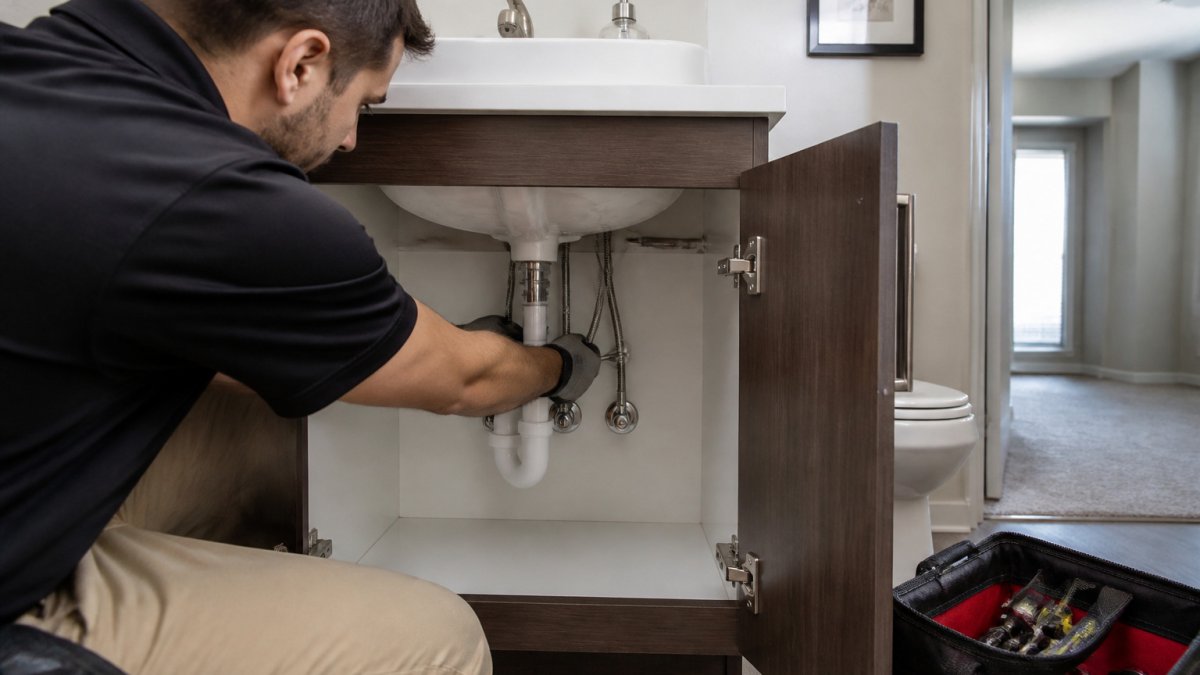
Start with the supply lines. Replacing a braided supply line takes minutes once the shutoff is closed and removes a common failure point. Sink supply lines are available as a matched pair for this quick swap.

For a broader sink repair, a complete kit saves trips. The sink kit pro bundles the parts most technicians need in one package.
Call a licensed plumber when:
Fill Valve / Flush Valve - Fluidmaster Pro Series™ Adjustable Fill Valve →
- The leak comes back after a first repair
- Water shows up on the ceiling or floor below
- The problem sits inside a wall or under a tub
- The fixture is old enough that the shutoff valves no longer hold
Watch out: a repeated leak under the sink can signal a damaged drain or shutoff, not just a bad supply line. Replacing parts repeatedly can cost more than one proper diagnosis.
How Long a Bathroom Repair Takes and What Delays It
Timelines vary widely.
The biggest delays are rarely the repair itself. Waiting on parts, a contractor's calendar, or a water shutoff are the usual culprits, a unit missing one fitting can sit empty for days while someone drives to a supply store.
Plan for these common delays:
- Parts not on the shelf when the tech arrives
- Contractor availability on non-emergency calls
- Permit or inspection timing for larger work
- Discovering a second problem once the first is open
Standardizing your parts is the most direct way to shorten these timelines, covered later. You can browse the faucet repair parts category to see the options a team would stock.
Average Cost of Bathroom Repairs Including Rework and Callbacks
The sticker price of a repair is only part of the cost. A $10 fill valve installed wrong can trigger a second visit, a water damage claim, and another day out of service. The useful comparison is total cost of the DIY route versus total cost of the contractor route, including the costs each route tends to hide.
Build the Total-Cost Comparison
For each task, list the same cost lines on both sides so the comparison is honest:
- Parts and materials. The part itself, plus the fittings, tape, sealant, and fasteners that a job always seems to need.
- Tools. A DIY route often requires buying a tool the team does not own, a basin wrench, a torque wrench, a wet/dry vac, a tile saw. A contractor brings tools as part of the labor rate.
- Labor. In-house labor is not free; it is technician hours pulled away from other work orders. Contractor labor carries a rate and often a minimum call-out fee.
- Permit fees. Required for many plumbing, electrical, and structural changes. The fee is small next to the cost of doing the work without one and having to open it back up.
- Disposal. Old toilets, tubs, tile, and packaging have to leave the property. Hauling and dump fees are easy to forget and add up on larger jobs.
- Downtime. A vacant unit earns nothing. Multiply the days out of service by the daily rent or room revenue to see the real cost of a slow repair.
- Expected rework. This is the line most comparisons omit. Estimate it from your own callback history by task type, not from optimism. A task with a 1-in-5 callback rate carries a real expected cost even when the first attempt succeeds.
A Worked Example
Consider a toilet that needs a fill valve and a wax ring.
Now add the hidden lines. A store run costs an hour of labor plus a vehicle trip.
A contractor route on the same job carries a labor rate and call-out minimum, but also a warranty and usually a single visit. The comparison only makes sense when both sides include tools, disposal, downtime, and expected rework.
Where Rework Actually Comes From
Callbacks commonly trace to causes such as the wrong part for the fixture model, a seal or connection not cleaned and seated properly, and a second problem discovered after the first was closed up.
Watch out: a repair that is cheap on the invoice and expensive in callbacks is the most common way bathroom maintenance budgets quietly overrun, the parts price is visible, the rework is not.
Choosing Your Next Step: Standardize Your Bathroom Repair Parts
The most practical step most teams can take is to standardize the parts they keep on hand.
Start with an audit: list the bathroom repairs your team performs each month and note which parts they use.
For a faucet or tub job, browse our faucet repair parts category to see the options your team would stock.
Standardizing will not solve every problem, some jobs still need a contractor, and some older units may need a full replacement.
Frequently Asked Questions
Is it more cost-effective to DIY bathroom repairs or hire a professional?
It depends on the task. Simple swaps like replacing a fill valve or wax ring typically involve modest parts costs when done in-house, so DIY can save money. Complex work involving supply lines behind walls, drain rerouting or code-regulated plumbing usually costs less overall when a licensed plumber handles it, because a failed DIY attempt often leads to water damage and rework. For property teams, the real comparison is labor hours plus callback risk, not parts alone.
What are the hidden costs of DIY bathroom repairs?
The hidden costs are usually extra store runs, wrong-size parts, tools bought for a single job, and water damage from a leak that was not sealed correctly. Each return trip adds labor time and delays the unit. A repair that needs to be redone can double the total cost, so track callbacks and rework alongside the price of parts when you compare DIY against hiring a contractor.
When should you avoid DIY bathroom plumbing repairs?
Avoid DIY work when the repair involves the main water line, drain stacks, gas-connected fixtures, or any task that may need a permit and inspection. Check your local building department to confirm which plumbing work requires a licensed contractor in your area. Sink and toilet component swaps are typically lower risk and suitable for in-house staff with basic plumbing skills.
How do standardized maintenance kits improve repair efficiency?
Standardized kits, such as Ready Bathroom Solutions' pre-kitted sets, put the parts for a given repair into one box so technicians do not waste time on store runs. Fluidmaster fill valves start at $10.82 and the PROFLO wax ring starts at $2.68 in the current catalog.
