

Table of Contents
- What a 1 1/4 Pressure Regulator Valve Actually Does
- 1 1/4 Pressure Reducing Valve Specifications That Matter
- Pressure Regulator vs Pressure Relief Valve: Different Jobs
- How to Choose by Application and Flow Demand
- Pressure Reducing Valve Maintenance Checklist
- Buying Bulk Plumbing Maintenance Parts for Portfolios
- Conclusion: Getting the Right Valve in the Right Unit
- Frequently Asked Questions
Last Updated: October 13, 2026
What a 1 1/4 Pressure Regulator Valve Actually Does
A 1 1/4 pressure regulator valve is a plumbing device that reduces incoming water pressure to a safe, consistent outlet pressure before water reaches fixtures, appliances, and supply lines.
Most property professionals underestimate how much pressure swings matter. Municipal water supply pressure can vary by time of day, and without a regulator, every fixture in the building absorbs that variation.
Here is the part most guides get wrong: a regulator is not a filter, and it is not a shutoff. It is a pressure control device. If your incoming water pressure is fine but your water is dirty, a regulator will not fix that.
1 1/4 Pressure Reducing Valve Specifications That Matter
Specifications decide whether a 1 1/4 pressure reducing valve fits your line and performs under real demand. The specs that matter most are connection type, pipe size, flow capacity, maximum inlet pressure, outlet pressure range, and temperature limit. Get any one wrong and the valve either will not install or will not keep up.
Connection Type, Pipe Size, and Flow Capacity
The connection type and pipe size must match your existing pipe fitting exactly. A 1 1/4-inch valve usually comes with female threaded connections, commonly listed as FNPT or NPT, though union and double union versions exist for easier service later.
A compatibility check before you buy saves the most time:
- Thread standard: Confirm NPT (tapered) versus NPS (straight), they are not interchangeable. Most residential and light commercial water lines use NPT.
- Nominal versus actual size: A 1 1/4-inch nominal valve does not measure 1.25 inches across the threads. Match the nominal size on the valve to the nominal size on the pipe, not to a tape measure reading.
- Union versus threaded body: Union ends cost more but cut service time. On a portfolio, that trade usually pays back on the first cartridge swap.
- Gauge port: If the valve has no gauge port, plan for a separate test port downstream so you can read and set outlet pressure.
Flow capacity is measured in gallons per minute. Undersize the valve and you get weak pressure at the far end of the building. Oversize it and you pay for capacity you never use. Match the valve's rated flow to your actual demand, not to the pipe diameter alone.
A practical way to estimate demand is to add up the fixtures likely to run at the same time and use their published flow rates as a rough total.
| Specification | What to Check | Why It Matters |
|---|---|---|
| Connection type | FNPT, NPT, union, or press | Must match existing pipe fitting and thread standard |
| Pipe size | 1 1/4 inch nominal | Wrong size will not seal or thread |
| Flow capacity | Rated gallons per minute at your outlet pressure | Undersizing starves distant fixtures |
| Maximum inlet pressure | Stated psi ceiling | Exceeding it damages the valve |
| Outlet pressure range | Adjustable or preset psi | Must suit fixtures and appliances |
| Temperature limit | Stated maximum water temperature | Exceeding it shortens diaphragm and seat life |
Lead-Free Construction, Strainers, and Gauge Ports
Lead-free bronze construction is standard for potable water lines, and it is not optional. Any valve touching drinking water must meet lead-free requirements under the federal Reduction of Lead in Drinking Water Act, so check the listing before you buy. A valve sold for potable water should carry a lead-free designation on its label or listing.
An integral strainer, also called a built-in strainer, catches debris before it reaches the cartridge. This single feature prevents most premature failures, because grit is what wears out a seat and causes the valve to stop holding pressure. A gauge port lets you attach a pressure gauge to read static pressure and confirm the set pressure after adjustment. If a valve has no gauge port, you are guessing.
How the Specs Interact
The specs are not independent. Raising outlet pressure lowers available flow. A higher maximum inlet pressure rating usually comes with a heavier body and a higher price. A wider adjustable outlet range gives you more flexibility but can make fine adjustment harder. When you compare two valves of the same nominal size, compare them at the same outlet pressure and the same inlet pressure, or the flow numbers are not comparable.
Pressure Regulator vs Pressure Relief Valve: Different Jobs
A pressure regulator and a pressure relief valve do opposite jobs and are not interchangeable. A pressure regulator controls and lowers the pressure going into your system.
Confusing the two is a common and expensive mistake. A regulator that fails can let full incoming water pressure through, and only a relief valve or a thermal expansion control will vent that excess.
So the question is not which one is better. It is whether your system needs one, the other, or both. Most residential water lines need a regulator. Systems with a closed loop and a water heater usually need expansion control as well.
How to Choose by Application and Flow Demand
Choosing by application beats choosing by price every time. Start with where the valve sits, how much water moves through it, and what the downstream fixtures need. A single apartment unit and a light commercial kitchen put very different demands on a 1 1/4 pressure regulator valve.
Match the Valve to the Application
- Single residential water line: size to the home's peak demand and confirm the outlet range suits the fixtures. A typical residential setting lands in the 50 to 60 psi range, though many fixtures and appliances tolerate a wider band.
- Light commercial: check flow capacity against simultaneous demand from multiple fixtures. Restrooms, kitchens, and laundry rooms can run at once, and the valve has to hold pressure through all of them.
- Irrigation zones: an irrigation regulator may be a better fit than a whole-building unit. Irrigation valves are often sized for lower, steadier pressure and may not need the same flow capacity as a domestic line.
- Multi-unit portfolios: standardize on one model so your team stocks one cartridge and one repair kit. Standardization is the real win, one maintenance checklist, one parts bin, any technician can service any unit.
A Sizing Method You Can Actually Use
Sizing by pipe diameter alone is a common mistake. A 1 1/4-inch line can still be starved by a valve with too little flow capacity, and you will chase weak pressure for weeks before realizing the valve, not the pipe, is the problem.
A workable sequence:
- List the fixtures on the line and note their published flow rates.
- Estimate simultaneous demand by adding the fixtures most likely to run together.
- Pick a target outlet pressure that suits the fixtures and appliances downstream.
- Read the valve's rated flow at that outlet pressure, not at some other pressure.
- Confirm the maximum inlet pressure at the valve exceeds the highest supply pressure you expect.
- Verify the connection type and nominal size match the pipe.
If the valve's rated flow at your target outlet pressure is below your simultaneous demand, move up a size or choose a higher-flow model. If it is far above, you are paying for capacity you will not use.
Compatibility Checks Before You Buy
- Thread standard: NPT versus NPS. They are not interchangeable.
- Nominal versus actual size: match nominal to nominal, not to a tape measure.
- Union versus threaded body: union ends cost more but cut service time.
- Gauge port: needed if you want to read and set outlet pressure without adding a test port.
- Strainer access: confirm the strainer can be cleaned or replaced without removing the whole body.
- Temperature limit: confirm the valve's rating exceeds your hottest supply water.
A Comparison Framework for Mixed Search Results
Search results for this size mix complete valves, repair kits, unrelated smaller regulators, and other valve types. Before comparing anything, verify three things: that the product is a complete pressure-reducing valve (not a repair kit or a cartridge), that the nominal size is actually 1 1/4 inch (not 1/4 inch), and that the connection type matches your pipe. Only then compare pressure range, flow capacity, materials, and features like strainers and gauge ports. A comparison table built on verified specs is worth more than a price sort on unverified listings.
Pressure Reducing Valve Maintenance Checklist
Maintenance is what separates a valve that lasts from one that fails mid-turn. A pressure reducing valve maintenance checklist keeps your team from skipping the steps that prevent callbacks. Run this on a set schedule, not only when a guest or resident complains.
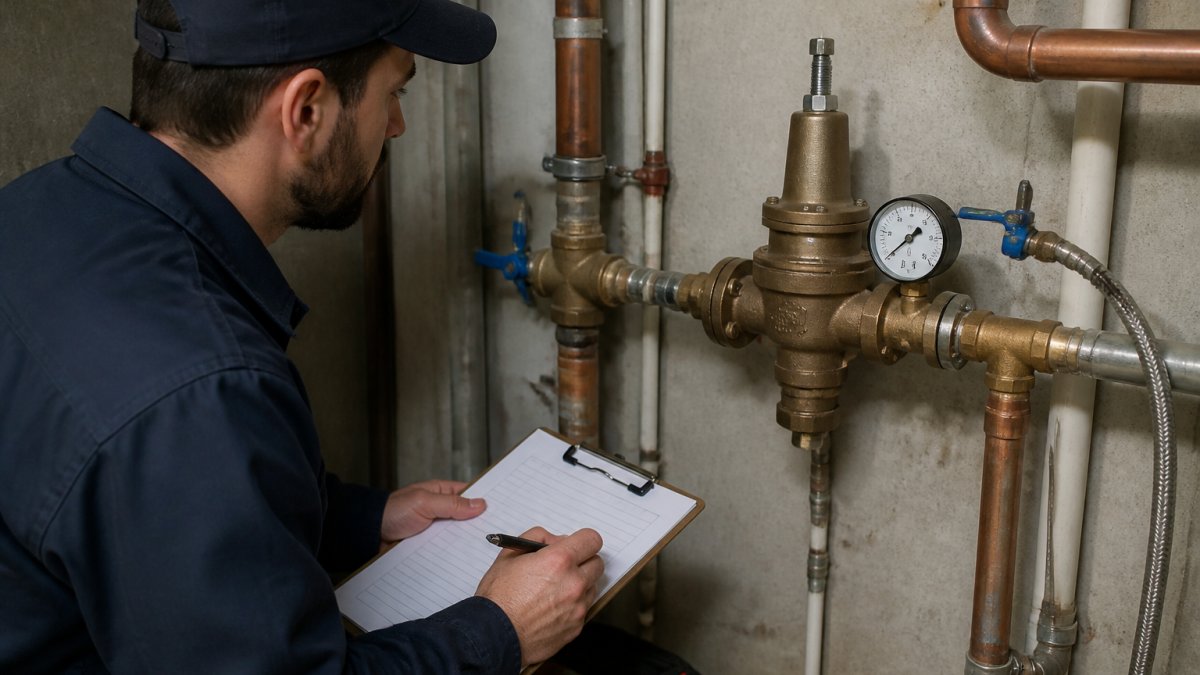
- Read static pressure at the gauge port and compare it to the set pressure.
- Check for leaks at the connections and the union.
- Listen for chatter or humming, which signals a worn cartridge.
- Inspect the integral strainer and clean or replace it.
- Confirm the outlet pressure holds steady when a fixture runs.
- Log the reading so you can spot drift over time.
When a valve stops holding pressure, the fix is usually a cartridge or a repair kit, not a whole new body. Keep replacement parts on hand so a repair does not turn into an emergency.
Buying Bulk Plumbing Maintenance Parts for Portfolios
Bulk buying changes the math on maintenance parts, but only if you buy the right things. The goal is not the lowest unit price. It is fewer store runs, fewer callbacks, and consistent parts across every unit you manage.
A common mistake is stockpiling odds and ends that never get used. Buy the parts that fail most often, in the sizes your buildings actually use, and keep them standardized.
Weigh total cost, not sticker price. A part that is slightly cheaper but forces a second trip costs more in labor than it saves on the shelf.
Conclusion: Getting the Right Valve in the Right Unit
The pressure is on to turn units fast without repeat visits. Getting the right 1 1/4 pressure regulator valve, sized by flow demand and matched to your connection type, prevents the weak-pressure and leak callbacks that eat your schedule. For portfolio-wide consistency, Ready Bathroom Solutions offers pre-kitted, OEM-grade maintenance kits with standardized components and bundle savings, so your team carries one box and one process across every property. Shop All Bathroom Kits and get your units back in service faster.
Frequently Asked Questions
What does a 1 1/4-inch pressure regulator valve do?
It takes high incoming water pressure from the main supply and drops it to a steady outlet pressure, usually in the 25 to 75 psi range depending on the preset. That protects fixtures, supply lines, and appliances from stress and water hammer. The 1 1/4-inch size is common on residential water lines and light commercial plumbing where several fixtures draw at once.
How do I choose the right pressure reducing valve for a 1 1/4-inch pipe?
Match four things: pipe size (1 1/4 inch), connection type (FNPT, union, or press), flow capacity in gallons per minute for your peak demand, and outlet pressure range. Check maximum inlet pressure and confirm the valve is lead-free. For multifamily or hotel units feeding multiple fixtures, size for peak flow, not average use, or outlet pressure will sag during morning demand.
What is the difference between a pressure regulator and a pressure relief valve?
A pressure regulator controls outlet pressure continuously during normal flow. A pressure relief valve stays closed until pressure crosses a set threshold, then opens to discharge water and prevent damage. Regulators manage everyday pressure control; relief valves are a safety backup, often on water heaters. They do different jobs and are not interchangeable in a plumbing system.
What should I verify before ordering replacement pressure regulator valves in bulk?
Confirm pipe size and thread type (NPT vs union), outlet pressure range, maximum inlet pressure, flow capacity, and whether the valve has an integral strainer or built-in bypass. Check lead-free compliance and gauge port availability. Standardizing on one or two models across a portfolio cuts ordering errors, reduces callback rates, and simplifies stocking replacement parts.